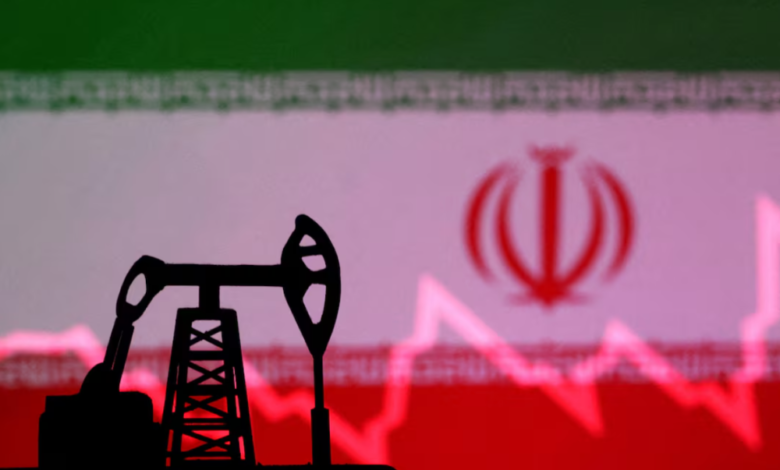

The United States announced a new and stringent package of sanctions targeting Iran's oil and petrochemical sectors, an escalation that coincides with reports of a round of indirect talks between the two sides hosted by the Omani capital, Muscat. This decision reinforces Washington's "maximum pressure" strategy toward Tehran.
Details of the new US sanctions
A statement issued by the U.S. State Department affirmed that the Trump administration remains committed to reducing the Iranian regime's exports of vital energy resources. The State Department spokesperson explained that the new sanctions target a broad network encompassing 15 entities and two individuals, as well as 14 vessels identified as part of Iran's illicit oil transport fleet.
The statement indicated that the aim of these measures is to deprive Tehran of the financial revenues it uses to "fund destabilizing activities in the region and suppress internal opposition," instead of directing those resources to improve the crumbling infrastructure and the well-being of the Iranian people.
The paradox of diplomacy and escalation in Muscat
This announcement comes at a significant time, as Iranian Foreign Minister Abbas Araqchi revealed that meetings had taken place between Iranian and American delegations in Muscat, confirming an agreement to "continue negotiations." These developments highlight the complex nature of US-Iranian relations, where economic pressure campaigns proceed in parallel with back-channel diplomatic communication.
Historical context: Maximum pressure strategy
These sanctions fall within a broader historical context that began with the United States' withdrawal from the Joint Comprehensive Plan of Action (JCPOA) in 2018. Since then, Washington has pursued a policy of "maximum pressure" aimed at reducing Iranian oil exports, the lifeblood of Tehran's economy, to zero. Washington believes that crippling the Iranian economy is the only way to force the regime to the negotiating table on new terms that address its nuclear program, ballistic missiles, and regional influence.
Oman's role and the regional importance of the event
These developments are of major regional and international importance, as the Sultanate of Oman plays a pivotal and historic role as a trusted mediator between the West and Iran. The continuation of talks in Muscat despite the sanctions indicates a desire on both sides to avoid sliding into a full-blown military confrontation and to maintain a delicate diplomatic channel.
Economically, global energy markets are watching these sanctions closely, as any further tightening of supplies or escalation of tensions in the Strait of Hormuz could lead to volatility in global oil prices. Iran faces increasing challenges in circumventing these sanctions, often through complex smuggling networks and selling oil at discounted prices to Asian markets, which is precisely what Washington is attempting to target in the latest round of sanctions.