America sinks 30 Iranian ships and Trump calls on the Revolutionary Guard to surrender

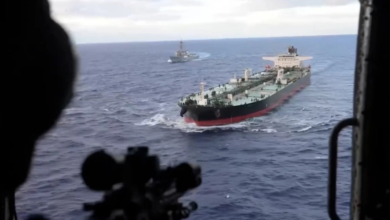
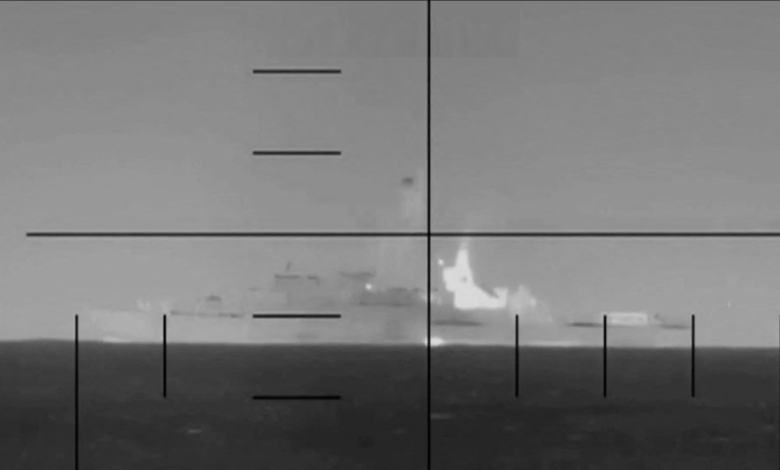
In a significant military development reflecting the escalating confrontation, the United States officially announced that it had inflicted heavy blows on the Iranian navy, confirming the sinking of more than 30 Iranian vessels since the recent military operations began. This announcement coincides with a noticeable decrease in the frequency of Iranian missile attacks, indicating a direct impact on Tehran's military capabilities.
Details of Iran's naval and air losses
During a press conference, Admiral Brad Cobb, commander of U.S. Central Command (CENTCOM), revealed details of the military operations, explaining that U.S. forces neutralized a major maritime threat by sinking more than 30 vessels. He specifically mentioned the targeting of an Iranian "drone carrier," describing it as comparable in size to aircraft carriers from the World War II era, and confirming that it was completely destroyed and set ablaze.
US military data confirmed that these strikes had immediate results on the ground, with Iranian ballistic missile attacks decreasing by 90% compared to the first day of the confrontations, and drone attacks decreasing by 83%, reflecting the success of the US strategy in targeting launch platforms and command and control centers.
Trump: Offering immunity and a strategy to "end Iran"
For his part, US President Donald Trump escalated his political rhetoric in parallel with the military operations, directly calling on members of the Iranian Revolutionary Guard, army, and police to lay down their arms. In remarks to ABC News, Trump offered immunity to anyone who responded to this call, advising Iranian diplomats to seek political asylum.
Trump indicated that the US strikes had set Iran back "10 years," revealing that 58% of Iran's missile launch sites had been destroyed. He emphasized that the timeline for destroying Iranian capabilities was proceeding faster than anticipated, asserting that the United States possesses the greatest military power in the world and had no choice but to respond decisively to end the threats.
Strategic context and regional importance
These developments are of paramount strategic importance given the location of the confrontation in the waters of the Persian Gulf and the Strait of Hormuz, a vital global energy artery. Historically, Iran has relied on a strategy of "asymmetric warfare," employing fast attack craft and drones to threaten shipping. Therefore, the sinking of such a large number of vessels and the destruction of a drone carrier represent a blow to the very core of Iranian naval combat doctrine.
Observers believe that neutralizing Iran’s naval and missile capabilities is not only aimed at protecting US forces, but also at changing the balance of power in the Middle East, reassuring regional allies, and ensuring the security of international navigation, which puts the Iranian regime under unprecedented military and political pressure that may push it either to back down or face the risk of internal collapse.