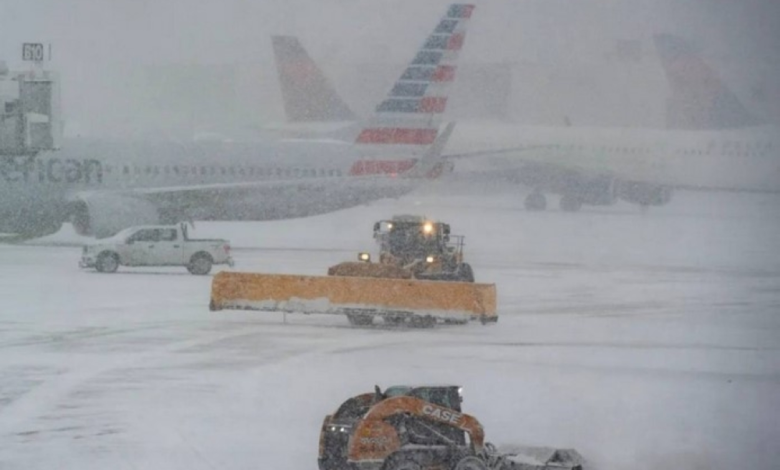

The United States experienced a complete standstill in air travel as a powerful snowstorm that struck the southern regions caused the cancellation of more than 2,400 flights, leading to widespread disruption to travel schedules and overcrowding at major airports. This weather disruption resulted from a deep coastal low-pressure system accompanied by extremely cold polar air masses.
Storm impact on hub airports
Official reports from Charlotte Douglas International Airport in North Carolina, a major air transport hub in the region, indicate that the storm caused the cancellation of over 1,800 flights. To address this emergency, the airport mobilized its staff, deploying a specialized team of 300 personnel working around the clock to clear snow from the runways and access roads, ensuring a safe resumption of operations as quickly as possible.
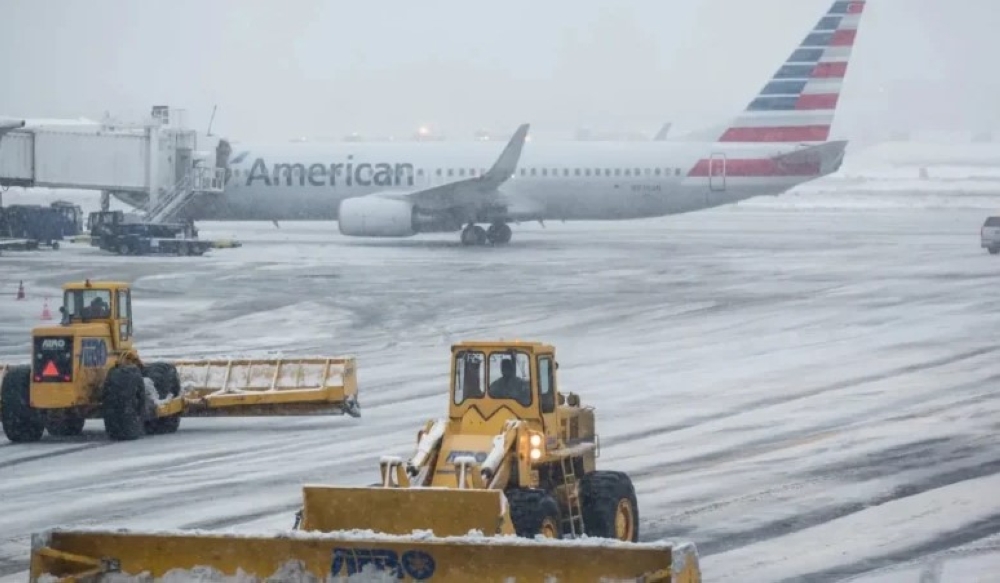
In a related development, Atlanta International Airport, one of the world's busiest airports, announced the cancellation of more than 600 flights, in addition to the cancellation of approximately 50 other scheduled flights to and from the city. The disruption at Atlanta's airport poses a significant logistical challenge, given its role as a major hub for both domestic and international flights, meaning the impact of these cancellations will extend to numerous destinations beyond the immediate storm path.
Weather warnings and expanding frost coverage
The US National Weather Service warned that the coastal depression is intensifying, forecasting continued heavy snowfall and strong winds across North and South Carolina. The forecast also indicated that the powerful polar air mass associated with the storm will cause temperatures to plummet to record lows below freezing, with its effects extending unusually far into the typically warmer regions of South Florida.
Record low temperatures
West Virginia recorded extremely low temperatures of -33 degrees Celsius, a level that poses a real danger to residents and infrastructure. These cold waves are a severe test for power grids and roads in southern states that do not usually experience such harsh conditions compared to northern states.
General context and effects of extreme weather
This storm is part of a series of extreme weather events that North America has experienced in recent years, with polar vortexes increasingly moving southward. These types of storms cause significant economic losses for airlines and the transportation sector, as well as directly impacting supply chains and domestic trade, always requiring federal and local authorities to maintain the highest levels of preparedness to ensure the safety of citizens and travelers.