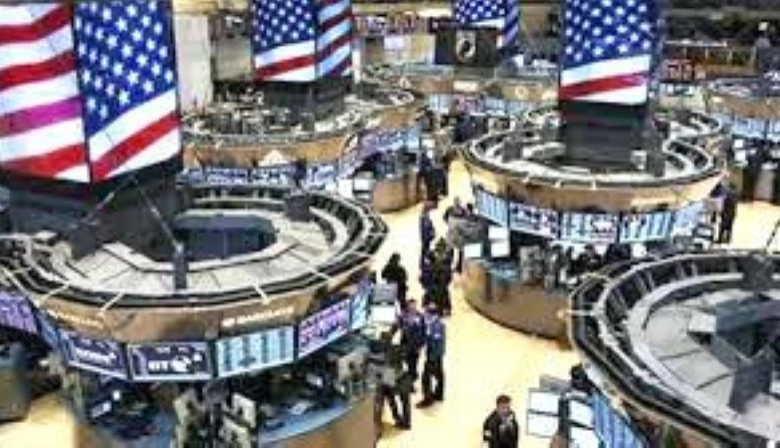
US financial markets experienced a sharp sell-off that led to a general decline in major indices, as panic and trade uncertainty gripped investors on Wall Street. This steep drop came as a direct and immediate reaction to US President Donald Trump's announcement of a sweeping 15% global tariff, an escalation following the Supreme Court's decision that struck down key parts of his previous trade agenda.
Details of losses in key indices
Trading screens showed significant declines, with the Dow Jones Industrial Average suffering the biggest loss, falling 1.30% or 653 points to settle at 48,972. The tech-heavy Nasdaq Composite was not immune to the downturn, dropping 0.70% or 154 points to close at 22,731. The broader S&P 500 also declined, falling 0.65% or 44 points to 6,865.
Context of the conflict between the presidency and the judiciary
These dramatic developments come amid a heated constitutional and political struggle. After the Supreme Court ruled last week to overturn most of the tariffs imposed by Trump since his return to the presidency, the president responded with an immediate decision on Saturday to raise the overall tariff from 10% to 15%. The US president has stated unequivocally that he does not need congressional approval to impose these tariffs, citing legal interpretations that the executive branch has long held the authority to impose tariffs in various forms, thus opening the door to a new legal battle.
Economic repercussions and global concerns
Economic analysts believe this move strongly revives the specter of global trade wars. Imposing a blanket 15% tariff effectively raises production costs for American companies reliant on global supply chains, which could consequently lead to renewed inflation as these costs are passed on to the end consumer. Markets fear that such protectionist policies could provoke retaliatory measures from major US trading partners, potentially putting pressure on global economic growth.
The impact of uncertainty on investors
Financial markets consider uncertainty their greatest enemy, and recent developments have created ambiguity surrounding the future trade policy of the world's largest economy. This situation typically prompts portfolio managers to reduce their exposure to high-risk assets like stocks and move towards safe havens. Forecasts indicate that volatility will continue to dominate trading sessions until there is greater clarity regarding the sustainability of these tariffs and their actual impact on corporate earnings in the next fiscal quarter.