The Sunrise Plan for the Reconstruction of Gaza and the Fate of the Arab Plan

The Middle East political scene is currently dominated by intense discussions about what is known as the "day after" the war in the Gaza Strip, with the recent emergence of a new American initiative called "Sunrise." This plan primarily aims to establish a practical framework for the reconstruction of the devastated territory. However, its timing and mechanisms raise fundamental questions about its compatibility or conflict with the "comprehensive Arab plan" that regional states are striving to formulate to ensure a sustainable political solution, not merely temporary economic fixes.
The context of destruction and the urgent need for reconstruction
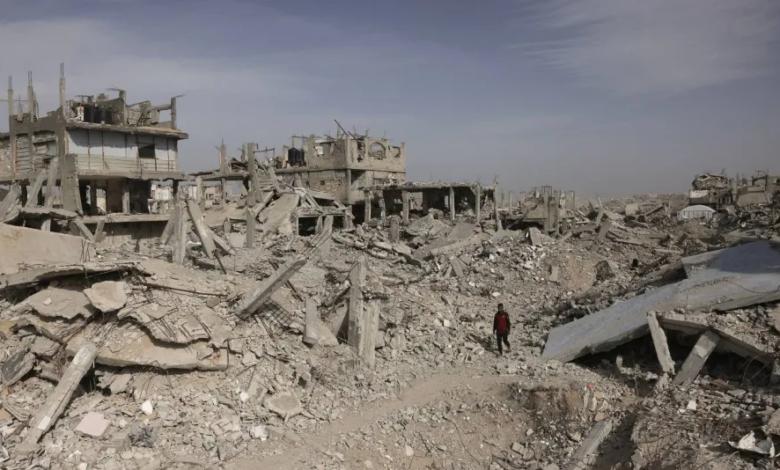
The talk of the "Sunrise" plan comes at a time when the Gaza Strip is suffering unprecedented destruction in modern history. International and UN reports indicate that the Strip's infrastructure has been almost completely devastated, including water and electricity networks, roads, and health and educational institutions. This catastrophic reality imposes a staggering reconstruction bill estimated at tens of billions of dollars, a burden no single entity can bear alone, thus necessitating broad international and regional intervention. It is here that Washington, through its plan, is attempting to offer a framework for managing this complex process.
The comprehensive Arab plan: Politics before economics
In contrast, key Arab states, most notably Saudi Arabia, Egypt, Jordan, and the UAE, have adopted a clear strategic position linking any reconstruction efforts to an irreversible political process. The Arab vision is based on the principles of the Arab Peace Initiative and resolutions of international legitimacy, emphasizing that injecting funds into Gaza without a political horizon leading to the establishment of an independent Palestinian state is merely a temporary fix, a prelude to a new round of conflict. The Arab concern is that American plans, which focus on security and economic aspects—such as "Operation Sunrise"—will dilute the fundamental political demand and delay a lasting solution to the conflict.
Regional and international dimensions and their expected impact
These moves are of paramount importance both regionally and internationally. On the one hand, the United States seeks to calm the region and ensure Israel's security through new security arrangements in Gaza that coincide with reconstruction. On the other hand, Arab capitals recognize that the stability of the entire region, including the security of the Red Sea and energy corridors, is linked to ending the flashpoint in Palestine. Therefore, the success or failure of coordinating the American vision (Operation Sunrise) with the comprehensive Arab vision will determine the shape of the Middle East for years to come. The greatest challenge lies in bridging the gap between the American desire for quick solutions to the humanitarian crisis and the Arab insistence on lasting political solutions that prevent a recurrence of the tragedy.
In conclusion, the question remains open as to whether the “Sunrise” plan will be a complementary step that paves the way for the Arab plan, or whether it will be a maneuver to delay the requirements of a just peace, which will be revealed by the upcoming diplomatic rounds.