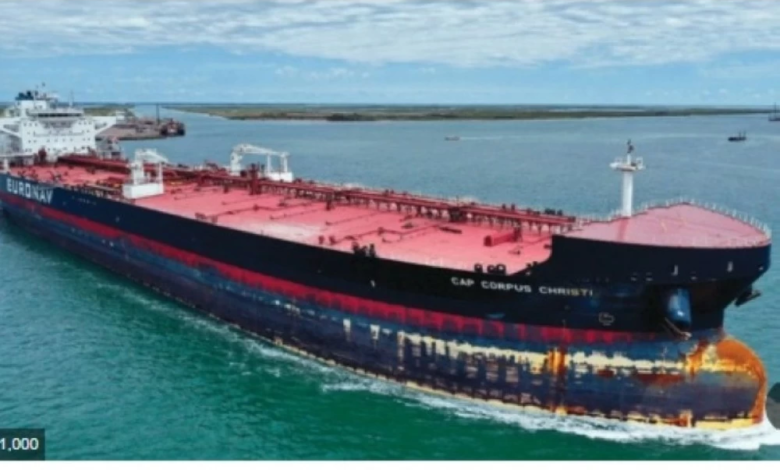

In a significant development in energy sector relations, the Venezuelan Ministry of Petroleum and the state-owned oil company PDVSA announced in a joint statement the successful coordination with the United States, which resulted in the return of the oil tanker Minerva to Venezuelan territorial waters. This announcement highlights the new dynamic in the management of oil resources between the two countries.
Details of the tanker incident and ship movements
The official statement explained that the Minerva had left the ports and sailed "without paying the required fees or obtaining the necessary permits from the competent Venezuelan authorities." This event coincided with the detection of increased activity by oil tankers linked to US companies. Ship tracking data compiled by Bloomberg and the trade information platform Kpler indicated that three of the 11 tankers chartered by the giant Chevron had already sailed from Venezuela toward the United States. Meanwhile, two other vessels were observed docked at the Bajo Grande refinery port in western Venezuela, while the remaining six tankers were returning empty to Venezuelan ports.
The strategic importance of Venezuelan oil
To understand the context of this growing American interest, one must consider the geopolitical and economic realities. Venezuela possesses the world's largest proven oil reserves, exceeding 300 billion barrels, surpassing even Saudi Arabia. Most of these reserves are concentrated in the Orinoco Belt, which contains vast quantities of heavy, high-sulfur crude oil. This oil has long been a focus of global powers, but maximizing its potential requires advanced technology and massive investments in extraction and refining, which major American companies are well-positioned to provide.
Infrastructure challenges and the history of sanctions
Over the past years, Venezuela's oil sector has suffered a severe deterioration in its infrastructure due to a lack of regular maintenance and the impact of harsh economic sanctions previously imposed by the United States. This has led to a decline in production to historically low levels, negatively impacting the domestic economy and regional energy markets. Recent moves are an attempt to restructure this vital sector and revitalize the Venezuelan economy, which is entirely dependent on crude oil revenues.
Political developments and investment pledges
In the context of the political changes mentioned by the source, which included a reference to a special US security operation targeting the former leadership, represented by Nicolás Maduro, and his transfer to the United States to face legal charges, massive economic promises for reconstruction emerged. US President Donald Trump made no secret of Washington's aspirations to benefit from Venezuela's oil wealth, announcing before his meeting with executives from major energy companies that these companies had pledged to invest an estimated $100 billion in the Venezuelan oil sector, heralding a new era that could reshape the energy landscape in the Americas.