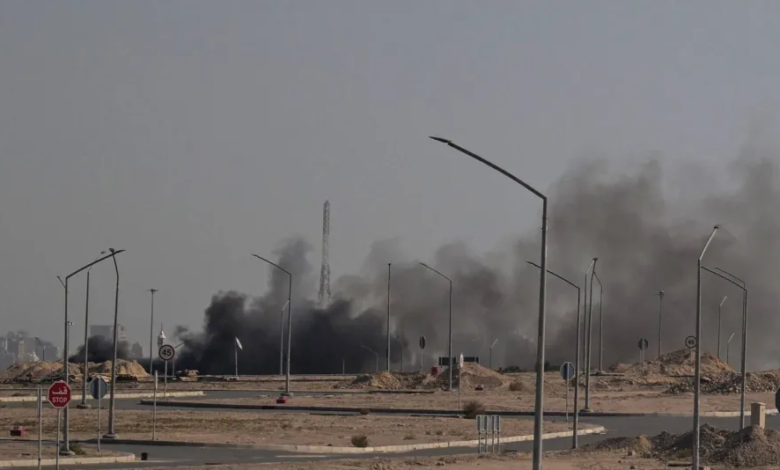
News reports and informed sources indicate that a US military aircraft crashed in Kuwait. Initial reports confirm that the crews ejected safely without any casualties. This incident highlights the nature of the intensive training operations conducted by US forces in the region and the stringent procedures in place to ensure pilot safety.
Details of the incident and the emergency response teams
According to available information, the accident occurred during a routine training mission, a common occurrence in the world of military aviation, which is characterized by highly precise and dangerous maneuvers. The aircraft's advanced safety systems, particularly the ejection seats, successfully saved the lives of the pilots, who were immediately evacuated by search and rescue teams always prepared for such scenarios. The relevant authorities have secured the crash site and launched a technical investigation to determine the precise cause of the malfunction or the circumstances that led to the accident.
General context: The American military presence in Kuwait
To understand the background of this event, one must consider the depth of the strategic relationship between Kuwait and the United States. Kuwait hosts several vital US military bases, most notably Camp Arifjan and Ali Al Salem Air Base. This presence is not a recent development, but rather the result of joint defense agreements signed following the liberation of Kuwait in 1991. Kuwait is a major non-NATO ally, making its territory and airspace a pivotal hub for US logistical and training operations in the Middle East.
The importance of joint exercises and their regional impact
These flight operations are often part of routine training exercises aimed at enhancing combat readiness and strengthening military coordination. While aircraft crashes are regrettable and costly, they also highlight the efficiency of rescue systems and the speed of emergency response. Regionally, the continuation of these exercises—despite these incidents—underscores the United States' commitment to the security of the Gulf and the stability of the region. This isolated incident is not expected to affect the course of military operations or the strength of military cooperation between the two countries. In fact, investigations into such incidents often lead to improved safety standards and aircraft maintenance in the future to prevent their recurrence.
In conclusion, the safety of human crews remains the highest priority in military custom, and the survival of the pilots in this incident is considered evidence of the efficiency of the training on emergency procedures and the quality of the safety equipment used.