International Monetary Fund: The global economy faces an energy and tensions test

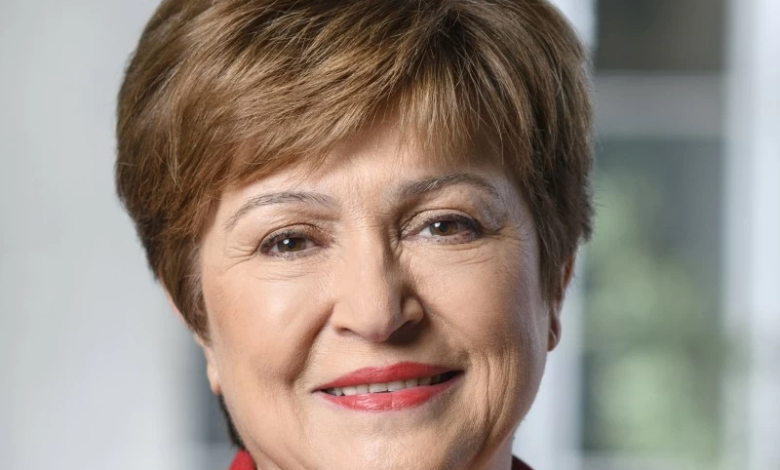
In significant remarks reflecting the critical juncture the global economy is facing, the Managing Director of the International Monetary Fund, Kristalina Georgieva , affirmed that the global economy has demonstrated remarkable and unexpected resilience in the face of a series of successive shocks that have rocked the world in recent years. Despite the growth rate remaining stable at 3.3% , Georgieva issued a stark warning that this resilience now faces a new and genuine test in light of current developments.
Scenarios for rising energy prices and their impact on inflation
During an interview with Bloomberg TV on the sidelines of a conference organized by the IMF, Georgieva provided a detailed analysis of potential risks, highlighting the sensitivity of global markets to fluctuations in the energy sector. She explained, using figures, that any 10% increase in energy prices , sustained for a full year, would not be without serious consequences, directly leading to:
- Global inflation rates rose by 40 basis points .
- A noticeable slowdown in global economic growth, ranging between 0.1% and 0.2% .
These warnings come in a global economic context that is trying to recover from the effects of the coronavirus pandemic and the Russian-Ukrainian war, making any new shock to energy prices an additional pressure that could hinder central banks' efforts to curb inflation.
Middle East and Asia: Divergent Resilience
Regarding regional impacts, the IMF Managing Director highlighted the situation in the Middle East , warning that several countries in the region are facing current geopolitical tensions with dwindling financial reserves. This decline in reserves stems from the depletion of financial resources in response to previous economic shocks, reducing the fiscal space available for governments to intervene and support their economies should crises worsen.
In contrast, Georgieva praised the Asian model, noting that many Asian economies have successfully strengthened their fiscal positions and built up robust reserves over the past two decades. This Asian success is historically attributed to lessons learned from previous financial crises (such as the Asian financial crisis of the late 1990s), where these countries adopted stringent precautionary policies that enabled them to create strong financial buffers against external shocks.
Recommendations for policymakers: Caution and building reserves
Georgieva concluded by offering crucial advice to countries and governments on how to ensure stability in a world of increasing uncertainty. She emphasized the need to:
- Acting decisively to ensure macroeconomic stability.
- Policymakers are monitoring price developments and currency markets very carefully.
- Taking advantage of periods of economic prosperity and growth to rebuild financial reserves, so that they serve as a first line of defense in the event of future crises.
This analysis shows that the global economy, despite its apparent cohesion, is still navigating a minefield of variables, with energy prices and geopolitical stability playing the biggest role in determining the growth trajectory for the coming years.