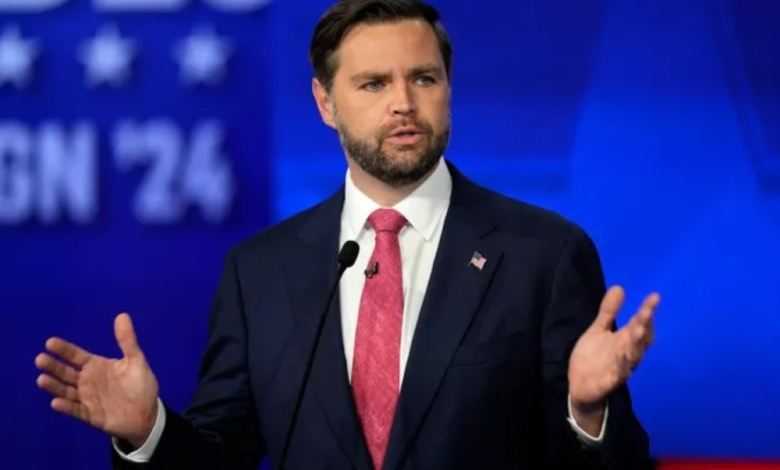
US Vice President J.D. Vance that the United States would not be drawn into a protracted war in the Middle East, even if President Donald Trump decided to launch limited military strikes against Iran . These remarks came at a critical juncture in US-Iranian relations, characterized by a mix of military posturing and diplomatic efforts.
Endless war scenario ruled out
In an interview with The Washington Post, Vance categorically denied concerns that any military action against Tehran could mire Washington in a new military quagmire. "The idea that we're going to be fighting a war in the Middle East for years with no end in sight is completely out of the question," Vance said. These remarks reflect the Trump administration's political doctrine, which favors "decisive deterrence" over the large-scale military interventions that characterized previous decades.
Vance responded to criticisms warning of the potential repercussions of airstrikes, noting that the US administration is well aware of the complexities of the region, and that the goal is not regime change through invasion, but rather setting clear red lines.
Military background and diplomatic vision
Vance bases his perspective on his personal experience as a former U.S. Marine who served in the Iraq War, making him acutely aware of the cost of protracted conflicts. He explained, "I think we all prefer the diplomatic option, but it really depends on what the Iranians do and say." This suggests a "carrot and stick" strategy, where military options remain on the table to strengthen the negotiating position.
Context of the Geneva talks
These statements coincide with intense diplomatic activity, as the Trump administration concluded the third round of US-Iranian talks in Geneva on Thursday. Iranian Foreign Minister Abbas Araqchi described this round as the "most intensive" to date, reflecting the seriousness of both sides in trying to reach understandings despite the escalating rhetoric.
Strategic and regional importance
These developments are of paramount importance both regionally and internationally, as countries in the region cautiously monitor the implications of this escalation. On the one hand, Washington seeks to reassure its allies that it is capable of deterring threats without igniting the entire region. On the other hand, Tehran is trying to avoid strikes that could target its vital infrastructure or its nuclear program. Analysts emphasize that Vance's dismissal of the possibility of a protracted war sends a dual message: a warning to Tehran that the response will be swift and decisive, and reassurance to the American public that the era of open-ended wars is over.