
The announcement of the arrest of Venezuelan President Nicolás Maduro has brought renewed attention to one of the world's most controversial countries, not only because of its volatile political landscape but also because of its vast economic potential, which has remained largely untapped by conflict and sanctions for years. The question of Venezuela's wealth is no longer merely an economic curiosity; it has become central to global strategic discussions about the future of energy and supply chains.
Historical context: From wealth to collapse
To understand the significance of this event, we must look back a little. In the mid-20th century, Venezuela was the richest country in South America, thanks to petrodollar inflows. However, excessive dependence on oil, shifting economic policies under Hugo Chávez and then Maduro, coupled with harsh US sanctions and mismanagement, led to an unprecedented economic contraction and hyperinflation. This historical context has made Venezuela a “sleeping giant,” possessing the theoretical keys to wealth but facing a harsh reality of hardship.
Crown jewel: The world's largest oil reserve
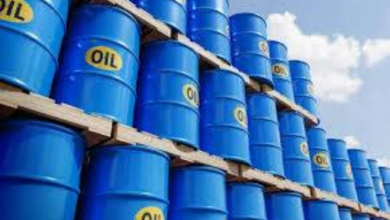
Venezuela reigns supreme in the global energy market, possessing the world's largest proven oil reserves , surpassing even the Gulf Arab states. Documented data indicates:
- Reserve size: estimated at approximately 303 billion barrels.
- Quality: Most of the oil is concentrated in the “Orinoco Belt”, and it is of the heavy and ultra-heavy type, which requires advanced refining technology.
- Market value: Theoretically, the value of these reserves exceeds $22 trillion (at an average price of $75 per barrel), an astronomical figure sufficient to rebuild the country tens of times over.
Despite these figures, the national oil company (PDVSA) suffered from deteriorating infrastructure and a lack of investment, which meant that actual production did not reflect the size of the huge reserves.
Natural gas: the silent wealth
In addition to oil, Venezuela possesses vast natural gas reserves estimated at over 6.3 trillion cubic meters , placing it among the top ten countries globally in this sector. The major opportunity lies in the fact that most of the gas fields, particularly the offshore ones, remain undeveloped, which will attract international companies to invest once the political situation stabilizes.
Mining Arc: Gold and Strategic Minerals
In the south of the country lies what is known as the "Mining Arc," an area rich in priceless mineral treasures:
- Gold: Venezuela has proven reserves of up to 8,000 tons, worth more than $500 billion.
- Rare earth minerals: Venezuelan territory contains strategic reserves of coltan (essential for the manufacture of phones and electronics), bauxite, iron, and nickel.
These minerals make Venezuela a potential and crucial player in the era of digital transformation and clean energy, where global demand for these resources is increasing.
Geopolitical and agricultural importance
The wealth isn't limited to what lies beneath the earth; Venezuela's geographic location on the Caribbean Sea, its proximity to the Panama Canal and American markets, makes it an ideal logistical hub. Add to that the fertile lands of the Llanos plains and the country's vast freshwater resources, enabling it to achieve food self-sufficiency and export high-quality products like cocoa and coffee.
Expected impact: locally and internationally
Venezuela's potential return to the international economic stage following recent political changes could have far-reaching implications:
- Internationally: The return of Venezuelan oil to full capacity could contribute to stabilizing global energy prices and provide strategic alternatives for Western markets.
- Regionally: Economic recovery is the fundamental solution to the migration crisis that has burdened neighboring countries in Latin America.
- Locally: The opportunity lies in transforming these astronomical figures from mere statistics into development projects that rebuild the middle class and end years of human suffering.
In conclusion, Venezuela remains a very resource-rich country, but converting these riches into tangible prosperity remains dependent on good governance, political stability, and the return of confidence to international investors.