Venus and Mercury Conjunction 2026: A rare astronomical event that cannot be observed

The Jeddah Astronomical Society revealed details of a highly anticipated and unique astronomical event. The Society's president, Engineer Majid Abu Zahra, explained that the sky on Thursday, January 29, 2026, will witness a rare planetary conjunction between Venus and Mercury. This event is characterized by an extremely small angular separation between the two celestial bodies, not exceeding 0.5 degrees. This apparent distance is roughly equivalent to the apparent diameter of the full moon, making it one of the closest conjunctions in astronomical calculations for that period.
Mechanics of celestial bodies and planetary motion
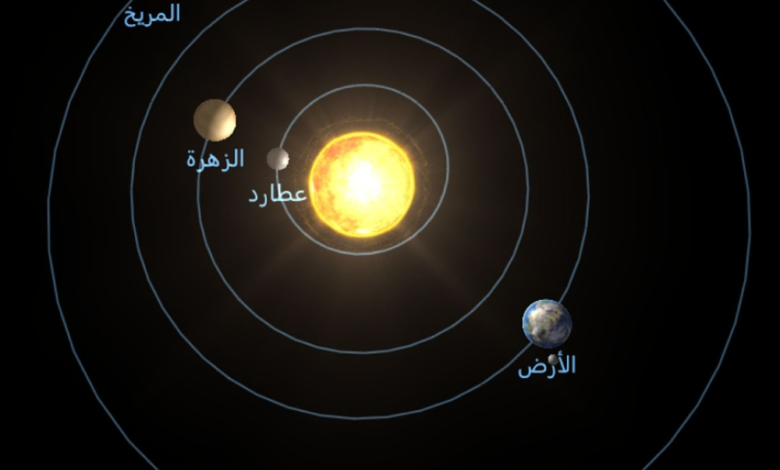
Scientifically, a planetary conjunction occurs when two celestial bodies, such as planets or planets and stars, appear very close to each other in the sky as seen from Earth, even though the actual physical distance between them in deep space remains vast, estimated at millions of kilometers. In this particular event, the difference in orbital speeds plays a crucial role; Mercury, the closest and fastest-rotating planet to the Sun, moves in its inner orbit at a much higher angular velocity than Venus, causing it to appear to catch up with Venus and pass close to it on the line of sight for an observer on Earth.
Impossibility of ground monitoring and safety risks
Despite the astronomical significance of the event, engineer Abu Zahra confirmed that this conjunction will not be observable with the naked eye or even with conventional ground-based telescopes. This is not due to the planets being faint; Venus is the brightest planet in our solar system, and Mercury also possesses considerable brightness. Rather, the reason lies in their position directly facing the sun at the time of conjunction. This position causes the sun's intense glare to overwhelm any light reflected from the planets, making any attempt to observe them with binoculars or a telescope a serious and direct risk to the retina, potentially leading to permanent blindness, in addition to the risk of damaging the optical sensors in cameras.
Human eyes in space: SOHO Observatory
Given the impossibility of ground-based observation, the importance of space-based observatories orbiting outside Earth's atmosphere becomes paramount. The head of the Jeddah Astronomical Society pointed out that observing this event will be exclusively from space, specifically through images from the SOHO observatory, a joint international project between NASA and the European Space Agency launched in the 1990s to monitor the Sun. This observatory possesses a sophisticated instrument known as the Coronagraph, a technology that creates a permanent, artificial solar eclipse using a metal disc that blocks direct sunlight, allowing for a clear view of the solar corona and its immediate surroundings.
According to astronomical calculations, the coronagraph images coming from SOHO will show Venus and Mercury as two bright points adjacent to the left of the sun; with Venus appearing at the top and Mercury at the bottom, while Mars will appear at the far right, in a panoramic space view that reveals the movement of the inner planets with extreme accuracy.
The scientific importance of invisible couplings
Abu Zahra concluded by emphasizing the scientific value of these phenomena, noting that planetary conjunctions—even those invisible to the naked eye—are vital for astronomers and orbital dynamics. They provide excellent opportunities to calibrate precise astronomical calculations related to elongation and orbital angles, and help refine mathematical models of planetary motion. These events are also used to test the efficiency and sensitivity of space-based instruments in observing luminous objects amidst the harsh optical environment near the Sun, constantly reminding us that the universe is full of wonders that require artificial eyes and advanced technologies to uncover their secrets beyond the limits of direct human vision.