Vital routes linking Saudi Arabia with the Gulf states: Importance and impact

The Kingdom of Saudi Arabia is considered the heart of the Arabian Peninsula, boasting a strategic geographic location that makes it a key link between the Gulf Cooperation Council (GCC) countries. The vital road network connecting Saudi Arabia to the Gulf states plays a pivotal role in fostering economic and social integration among the region's people. As part of its Vision 2030, Saudi Arabia aims to become a global logistics hub, further enhancing the importance of these roads and land crossings.
The historical context of the development of the Gulf road network
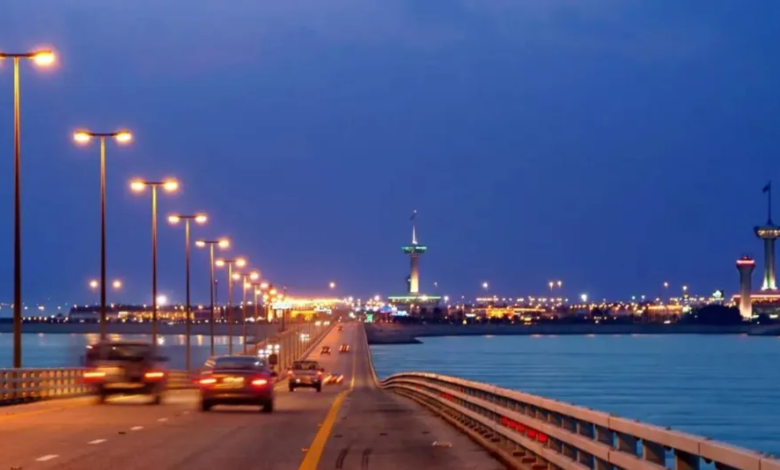
Since the establishment of the Gulf Cooperation Council (GCC) in 1981, its leaders have recognized the importance of land connectivity as a cornerstone for achieving regional integration. Efforts began early to create a robust and unified infrastructure, with the opening of the King Fahd Causeway in 1986 being a pivotal milestone. This causeway, linking Saudi Arabia and Bahrain, revolutionized transportation and trade. Subsequent strategic projects have focused on expanding and developing border crossings with all neighboring countries to facilitate the movement of people and goods.
Key roads and vital land crossings
Saudi Arabia possesses an extensive network of highways and border crossings connecting it to all Gulf countries, the most important of which are:
- Al-Batha border crossing (United Arab Emirates): It is one of the most important land trade arteries, witnessing a huge movement of trucks and goods, in addition to travelers, and it connects the Kingdom to the modern Emirati road network.
- The Empty Quarter Road (Sultanate of Oman): This recently opened road is considered an unprecedented engineering and historical achievement, as it cuts through the Empty Quarter desert to connect Saudi Arabia and Oman directly, thus shortening hundreds of kilometers and long hours of travel, and enhancing trade and tourism exchange.
- Salwa border crossing (State of Qatar): It represents the main land gateway to the State of Qatar and plays a vital role in the movement of trade between the two countries and family tourism.
- Al-Khafji and Al-Ruqai border crossings (State of Kuwait): Vital, dual carriageways that facilitate daily and commercial traffic between the northeast of the Kingdom and the State of Kuwait.
- King Fahd Causeway (Kingdom of Bahrain): An indispensable economic and tourist artery, and considered one of the busiest and most successful land crossings in the region.
The economic and social importance of land connectivity
The importance of these vital routes is not limited to simply facilitating transportation, but extends to include profound economic and social dimensions:
Local and regional impact
Locally, these roads contribute to the development of Saudi Arabia's border provinces and cities, and create new job opportunities. Regionally, this network boosts intra-Gulf trade, reduces transportation and logistics costs, supports intra-GCC tourism, and strengthens social and family ties among GCC citizens.
International influence
Internationally, the Gulf land connectivity contributes to enhancing the resilience of global supply chains. By linking the ports of the Arabian Gulf and the Red Sea with a sophisticated road network, the region becomes a secure and rapid trade corridor connecting the continents of Asia, Europe, and Africa, attracting foreign direct investment.
Future aspirations and Vision 2030
The Kingdom of Saudi Arabia, in cooperation with its Gulf Cooperation Council (GCC) partners, continues to invest heavily in developing road infrastructure and implementing the latest smart technologies in customs management to expedite procedures. These land routes complement the ambitious future project, the GCC Railway, which, upon completion, will usher in a new era of logistical connectivity, further solidifying Saudi Arabia and the Gulf region's position as a leading global economic hub.