Warshafana tensions: Revenge feuds and militias threaten the stability of western Libya

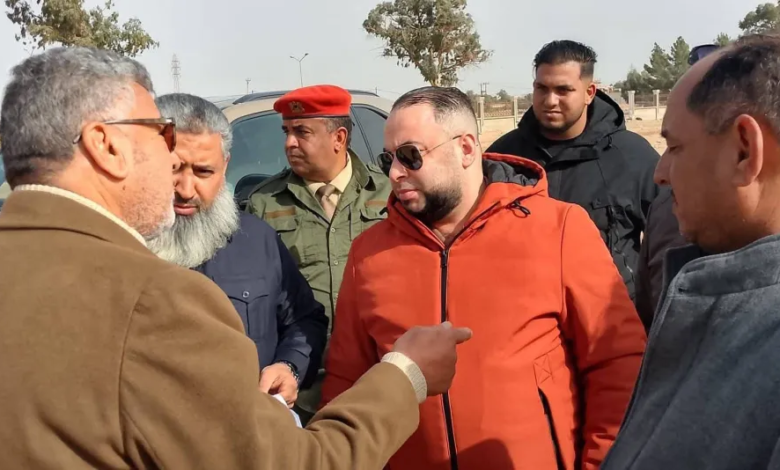
The Warshafana region, located in the southwestern suburbs of the Libyan capital, Tripoli, remains gripped by persistent security tensions. The specter of revenge casts a dark shadow over the region, fueling endless conflicts between armed militias and local gangs. This volatile situation is not a recent development, but rather the culmination of accumulated security and social factors that have transformed the area into a hotspot threatening the stability of western Libya as a whole.
General context and strategic importance of Warshafana
The Warshafana region holds immense strategic and geographical importance. It serves as the western gateway to the capital, Tripoli, and a vital link between the capital and the Tunisian border, as well as a key passage to the cities of the Western Mountains. Given this sensitive location, any security breach there has a direct and immediate impact on the capital and its surrounding areas. Historically, since the fall of the previous regime in 2011, the region has suffered from a significant security vacuum, allowing weapons to proliferate outside state control and enabling the emergence of armed groups operating according to regional or tribal agendas, beyond the authority of the Ministries of Interior and Defense.
The vicious cycle of revenge and the absence of law
What distinguishes the current tension is the prevalence of personal and tribal vendettas in the clashes, where individual or criminal disputes quickly escalate into large-scale armed confrontations between militias. The absence of legal deterrents and the weakness of judicial and police institutions in the region have encouraged these groups to enforce the "law of force" rather than the rule of law, plunging the population into a cycle of violence and counter-violence. These conflicts are fueled by shifting alliances between armed groups in neighboring cities, further complicating the situation and making a lasting truce difficult to achieve.
Local and regional influences
The continued tension in Warshafana has serious repercussions that extend far beyond the region's administrative boundaries. Locally, residents suffer from insecurity, frequent kidnappings, and the blocking of main roads, disrupting daily life and trade. Regionally, the stability of Warshafana is seen as a benchmark for the success of any political or security process in Libya; the ongoing chaos there hinders efforts to unify the military and obstructs the path to elections, as militias remain a major obstacle to extending state authority. Observers warn that leaving this issue unresolved could lead to a widespread security explosion that would reshuffle the cards in the entire western region.