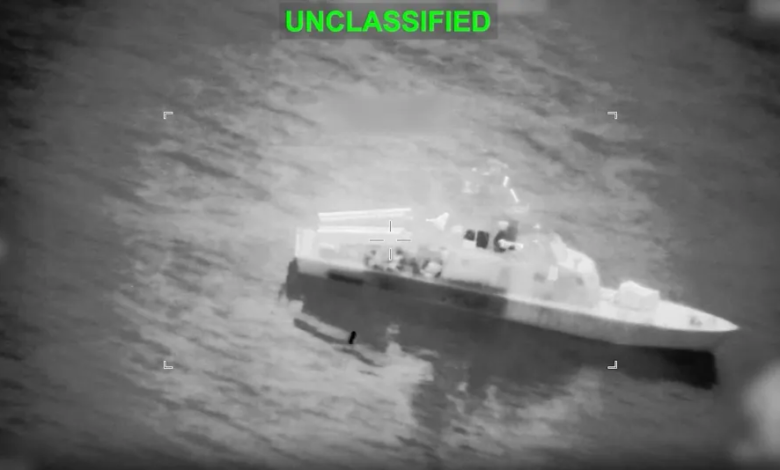

Details of the incident involving a cargo ship being damaged in the Strait of Hormuz
In a new security development that is raising concerns in maritime and international circles, recent reports indicate that a commercial cargo ship was struck by a projectile of unknown origin in the Strait of Hormuz. This incident once again highlights the risks facing maritime navigation in one of the world's most strategically important waterways. Immediately following the incident, maritime trade operations authorities and relevant security agencies issued warnings to vessels transiting the area to exercise extreme caution, while investigations were launched to determine the nature of the projectile and the party responsible for this direct attack.
General context and historical background of tensions in the Strait of Hormuz
This incident is not the first of its kind in this sensitive region. The Strait of Hormuz, which connects the Persian Gulf, the Gulf of Oman, and the Arabian Sea, has witnessed a series of security tensions over the past decades. Historically, the most prominent of these tensions dates back to the Tanker War of the 1980s, during which numerous commercial vessels and oil tankers were targeted. In recent years, similar incidents have occurred repeatedly, involving attacks on commercial ships by drones, sea mines, or missiles, prompting the international community to form maritime coalitions to ensure the security and freedom of navigation in this vital waterway.
The strategic importance of the Strait of Hormuz and the impact of the event
The seriousness of the incident involving a cargo ship in the Strait of Hormuz lies in the strait's immense economic and geographical importance. The Strait of Hormuz is a vital artery for global energy flows, with approximately one-fifth of the world's oil production passing through it, in addition to vast quantities of liquefied natural gas. Therefore, any security threat in this region has repercussions not only on a local scale but also on the entire global economy.
Expected effects of the accident:
- Regional and local impact: This targeting leads to heightened security alerts among regional and international naval forces present in the area. It also imposes additional burdens on shipping companies, including increased insurance costs and the need to reroute vessels to avoid areas of tension.
- International and economic impact: Global energy markets typically react immediately to such news, as attacks on ships raise concerns about disruptions to oil and gas supplies, potentially leading to volatility or spikes in crude oil prices. Furthermore, global supply and trade chains that rely on this waterway for transporting goods between East and West are affected.
International calls to strengthen maritime security
In light of the recurrence of such incidents, calls are growing from international organizations and major powers for respect for international laws guaranteeing freedom of navigation. These entities emphasize the importance of concerted diplomatic and security efforts to secure vital waterways and prevent any military escalation that could drag the region into wider conflicts, negatively impacting regional stability and international peace and security. The continued targeting of commercial vessels constitutes a blatant violation of international maritime law and necessitates a firm stance to ensure the continued safe flow of global trade.