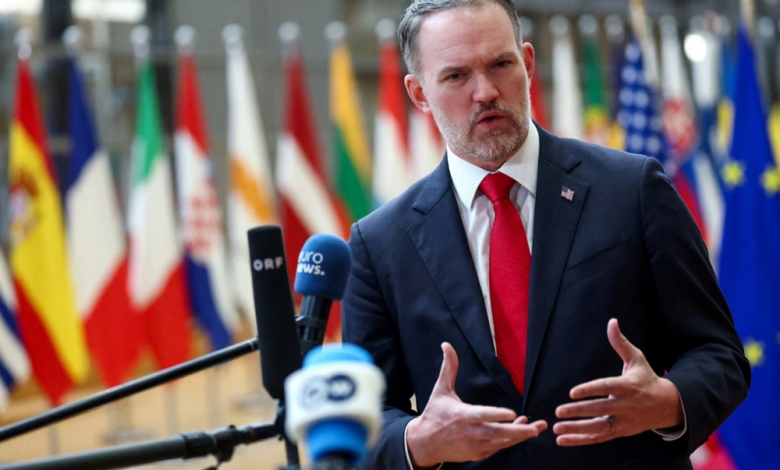
Washington warns Europe against activating anti-coercion measures over Greenland

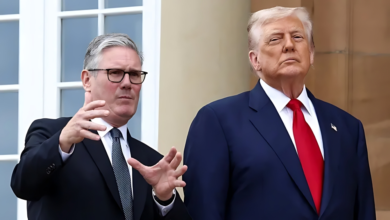
The United States, through its Trade Representative Jamieson Greer, issued a strongly worded warning to European countries against invoking the so-called "anti-coercive measures" amid escalating tensions over President Donald Trump's desire to purchase Greenland from Denmark. Greer asserted that resorting to this option would be an "unwise" move that could have complex economic and political consequences.
Background to the crisis and the strategic importance of Greenland
These warnings come at a time of escalating tensions between Washington and Brussels over the Arctic island. Historically, the United States' desire to control Greenland is not a recent development, given the island's vital geostrategic location in the Arctic and the presence of Thule Air Base, a cornerstone of the US early warning and missile defense system.
Besides its military importance, Greenland is rich in enormous natural resources and rare earth minerals that have become the focus of the great powers in light of the international competition for Arctic resources, making the European and Danish refusal to sell it a matter of national sovereignty and European national security at the same time.
European posturing and American response
French President Emmanuel Macron had explicitly called on the European Union to use its “anti-coercive mechanism,” a recently established EU legal tool designed to deter countries attempting to exert economic or political pressure on member states. Macron’s call came in response to President Trump’s threats to impose punitive tariffs of up to 25% on products from eight European countries that opposed his annexation plans for the island.
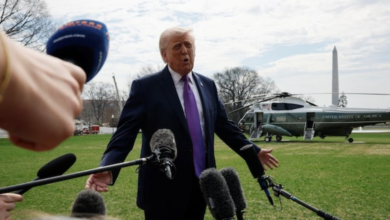
In remarks to reporters during the Davos Economic Forum, Greer said: “Every country will do what is in its national interest, and this has natural consequences,” stressing that activating the European tool would be met with an American reaction, which is in line with statements by US Treasury Secretary Scott Bisent.
Fears of a trade war and economic repercussions
This escalation is raising fears in global markets of a new transatlantic trade war. While some European officials are pushing for de-escalation and containment of the crisis through diplomatic channels, another faction sees a need to confront what they describe as "blackmail" regarding the fate of the self-governing Danish territory.
For his part, US Commerce Secretary Howard Lutenick urged European countries to “keep the pressure and heat low,” warning that any amendment to the trade agreement concluded last July, which capped US tariffs at 15%, would not be in the interest of the Old Continent.
The future of trade relations
In closing, Greer alluded to a new reality in international trade relations, stating, “Under Trump, trading partners should not assume that the US market will always be open to everyone.” He added a warning: “What I’ve observed is that when countries follow my advice, they do well, and when they don’t, crazy things happen,” leaving the door open to all possibilities should the EU decide to deem Greenland’s fate non-negotiable.