Today's weather: Dense fog covers 11 regions and weather alerts are in place

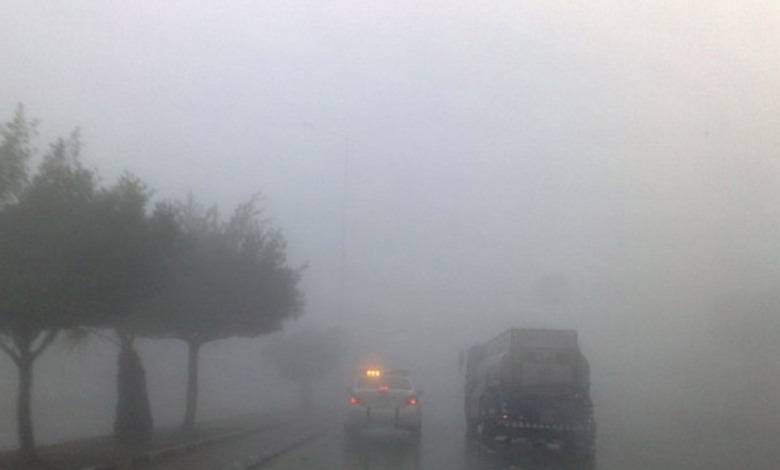
The National Center for Meteorology in Saudi Arabia issued weather conditions for the early morning hours of Thursday, warning of the formation of fog of varying intensity that directly affects horizontal visibility in large parts of the Kingdom, including 11 administrative regions.
The center explained in its weather bulletin that the prevailing weather phenomenon is fog, which leads to a decrease in horizontal visibility to between (3-5) kilometers in some locations, while it may reach a near-zero visibility with a range between (1-3) kilometers in other locations, which calls for caution and vigilance on the part of drivers and users of highways.
Areas and cities affected by the weather conditions
The alerts included a wide range of cities and provinces in the following regions:
- Eastern Province: Jubail, Khobar, Dammam, Qatif, Ras Tanura, Khafji, Nairyah, Qaryat Al-Ulya and Hafr Al-Batin were affected.
- Riyadh region: The fog included Al-Zulfi, Al-Ghat, Al-Majma’ah, Shaqra, Thadiq, Huraymila, Rumah, Dhurma, and Marat.
- Makkah Region: The situation was concentrated in the highlands of Taif and Maysan.
- Medina region: included Al-Ula Governorate.
- Al-Qassim region: Fog covered Al-Asyah, Al-Badai’, Al-Bukayriyah, Al-Thamiriya, Al-Shamasiya, Al-Ammar, Al-Mudhnib, Buraydah, Unayzah, and Uyun Al-Jawa.
- Hail region: Al-Shanan, Baqaa, Hail city, and Samira were affected.
- Jazan region: It included Al-Harth, Al-Dayer, Al-Raith, Al-Ardah, Al-Aydabi, Fifa, and Haroub.
- Asir region: The situation affected Abha, Al Namas, Balqarn, Tanomah, and Khamis Mushait.
- Tabuk region: Tayma and Tabuk city.
- Northern Border Region: Tarif, Al-Uwaiqilah, Arar, and Rafha.
- Al-Jawf region: Dumat Al-Jandal, Sakaka, Al-Qurayyat, and Tabarjal.
Traffic safety guidelines during fog
In a related context, and coinciding with these weather changes, security and traffic authorities, such as the Special Forces for Road Security, typically advise adhering to safe driving practices in adverse weather conditions. Among the most important guidelines to follow in foggy conditions are:
- Reduce speed in accordance with road conditions and visibility.
- Use fog lights or low beam lights instead of high beam lights, which may scatter vision due to light reflecting off water droplets.
- Leave a sufficient safety distance between vehicles to avoid sudden accidents.
- Avoid sudden changes in routes and use warning signals when necessary.
The importance of early weather monitoring
The reports issued by the National Center for Meteorology are crucial for preserving lives and property. Early detection of weather phenomena such as dense fog or rain enhances the preparedness of service and security agencies to respond to any emergency. These weather fluctuations are part of the Kingdom's climate during transitional periods and winter, as high humidity levels and low minimum temperatures contribute to the formation of dense fog, particularly in open areas, mountainous regions, and coastal areas.