
The National Center for Meteorology issued its daily weather report for Friday in Saudi Arabia, revealing significant weather fluctuations affecting several regions. The report included important warnings for citizens and residents to exercise caution due to frost formation, strong surface winds, and reduced horizontal visibility caused by dust and sandstorms across large parts of the country.
Weather details and affected areas
According to the meteorological statement, the impact of active winds stirring up dust and sand continues, reducing horizontal visibility in parts of the Tabuk, Madinah, and Makkah . This effect extends to the eastern parts of the Al-Baha and Asir . These weather phenomena are typical for this time of year, as wind currents become active and stir up sand in open areas and on highways.
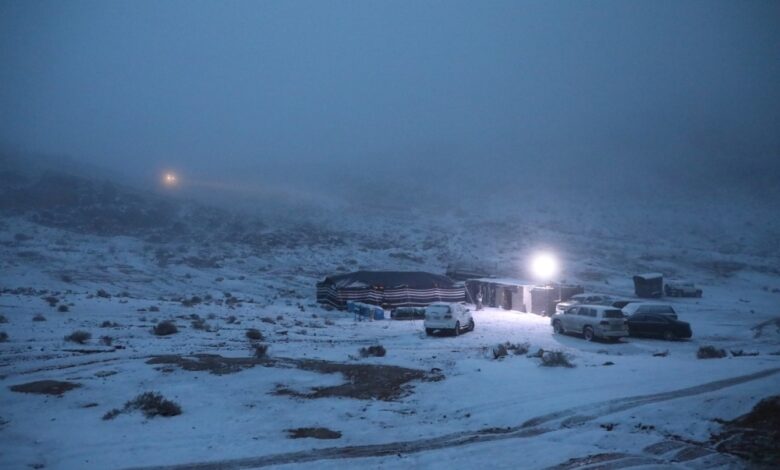
In contrast, northern regions are experiencing a noticeable drop in temperatures. The weather remains cold to very cold, with a high probability of frost the Northern Borders, Al-Jawf, Hail, and Tabuk regions , as well as the northern parts of the Madinah and Eastern regions.
Climate context and the impact of cold waves
This weather pattern is typical of Saudi Arabia's winter climate, as the northern and central regions are affected by cold air masses from the north and northwest. Historically, areas such as the Northern Borders, Al-Jawf, and Hail experience severe cold waves, often causing temperatures to drop below freezing. This necessitates that farmers and road users take necessary precautions to protect crops and vehicles from frost.
The importance of warnings and the effects of dust
These warnings are of paramount importance to public safety, as the dust and sandstorms directly affect those with respiratory conditions and asthma, requiring them to remain indoors as much as possible. Reduced visibility also poses a risk to drivers, especially on the highways connecting Mecca, Medina, and Tabuk. Relevant authorities, such as Civil Defense and Highway Patrol, are working in coordination with the Meteorology Department to ensure everyone's safety during these weather fluctuations.
State of the Red Sea and the Arabian Gulf
Regarding the maritime situation, the center provided the following details:
- Red Sea: Surface winds are westerly to northerly in the northern and central parts at speeds of 25-45 km/h, while in the southern part they are southeasterly to southerly at speeds of 12-35 km/h. Wave heights range from 1.5 to 2.5 meters in the north and central parts, resulting in moderate to rough sea conditions.
- Arabian Gulf: Surface winds will be northwesterly to westerly at a speed of 25-50 km/h, with wave heights ranging from one to two meters, and may reach two and a half meters in the northern and central parts, which means that the sea state will be moderately rough and will reach rough in those parts.