Today's weather forecast, January 6: Lower temperatures and rain in the city

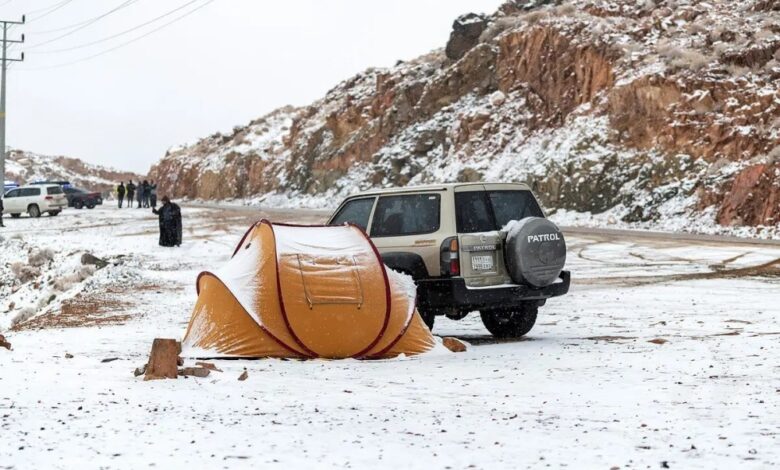
Saudi Arabia experienced a significant cold wave on Tuesday, January 6th, with the National Center for Meteorology reporting record low temperatures in the northern regions. Al-Qurayyat and Rafha were the coldest cities, recording only 2 degrees Celsius, reflecting the peak of winter in these areas.
Temperature details in the cities of the Kingdom
According to the daily report, Al-Qurayyat and Rafha were not the only areas affected by the cold air mass. Hafr Al-Batin recorded a low of 3 degrees Celsius, while the minimum temperature in Arar, Sakaka, and Tarif reached 4 degrees Celsius. The cold extended to the capital, Riyadh, as well as Abha, Buraidah, and Hail, where minimum temperatures settled at 5 degrees Celsius, prompting residents to take necessary precautions against the cold.
Weather phenomena: rain, dust, and fog
The National Center for Meteorology clarified that there is still a chance of light rain in parts of the Madinah region. Simultaneously, the effects of active winds stirring up dust and sand will continue, potentially reducing horizontal visibility in parts of Madinah and extending to the eastern parts of the Makkah, Al-Baha, and Asir regions. The center also warned of the possibility of fog formation during the night and early morning hours in the southern parts of the Eastern Province, requiring caution while driving on highways.
The state of the Red Sea and the Arabian Gulf
In terms of maritime navigation, the Red Sea is experiencing surface winds ranging from 20 to 40 km/h, with waves reaching up to two meters in height. Meanwhile, in the Arabian Gulf, surface winds are active, reaching speeds of up to 45 km/h, accompanied by thunderstorms and rain in the southern part, which may lead to waves reaching up to two meters and rough sea conditions in those areas.
Climatic context: Winter in northern regions
These temperature drops are a natural part of the Kingdom's winter climate, as the northern regions (such as Qurayyat, Tarif, and Arar) are the first gateway for cold air masses coming from Siberia or Eastern Europe. Historically, January experiences the lowest temperatures of the year, and these areas are often affected by frost waves that can cause temperatures to drop below freezing in some seasons, directly impacting daily activities and agriculture.
Public safety recommendations
Due to the current weather fluctuations, which combine extreme cold, dust, and the possibility of rain, experts advise wearing heavy winter clothing, especially for children and the elderly during the early morning hours. Motorists traveling on highways in areas affected by dust or fog (particularly in the Eastern Province and Medina) are also advised to exercise caution, maintain safe distances between vehicles, and continuously monitor Civil Defense and Meteorology alerts to ensure everyone's safety.