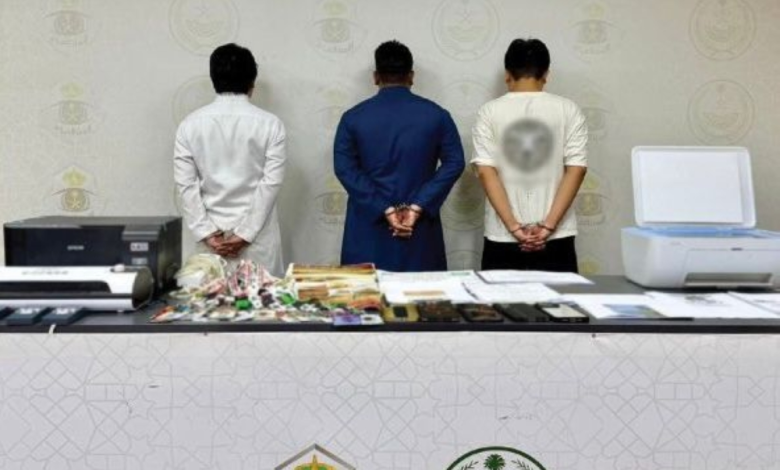

Security authorities in the holy city of Mecca announced the arrest of three Indonesian residents for their involvement in a fraud network targeting pilgrims intending to perform Hajj. Security patrols explained that they were able to identify and apprehend the suspects after a thorough investigation and monitoring of their suspicious activities.
Details of the fraud and arrest operation
The defendants relied on social media platforms as their primary tool for disseminating misleading advertisements promoting fraudulent Hajj services at enticing prices, with the aim of luring victims. During the arrest, a number of forged Hajj permits, which they intended to use in their fraudulent activities, were found in their possession, along with technical tools and equipment used to design and publish the advertisements and communicate with victims. They were immediately detained, and all necessary legal procedures were initiated against them, in preparation for referring them to the Public Prosecution for further investigation and formal charges.
General context: The Kingdom's efforts to secure the Hajj season
This operation comes as part of the intensive efforts undertaken by the government of the Kingdom of Saudi Arabia to ensure the safety and security of pilgrims to the Holy Mosque and to guarantee an organized and violation-free Hajj season. As the Hajj season approaches each year, security and regulatory agencies increase their readiness to combat all forms of crime, especially fraud and scams that exploit the religious yearning of Muslims worldwide to perform the fifth pillar of Islam. Saudi authorities proactively monitor and track fraudulent online campaigns to protect pilgrims from falling victim to scammers.
The importance of adhering to regulations and the impact of fraudulent campaigns
This incident underscores the paramount importance of the Kingdom’s annual national campaign, “No Hajj Without a Permit,” which aims to regulate the Hajj pilgrimage, ensure the safety of pilgrims, and manage crowds efficiently. Obtaining a Hajj permit through official channels is the only way to guarantee a safe and fully serviced pilgrimage. Fake Hajj campaigns cause significant harm, not only incurring financial losses for victims but also shattering their dreams of performing the pilgrimage and disrupting the organizational plans for the Hajj season. Internationally, combating these crimes strengthens the Muslim world’s confidence in the Kingdom’s ability to manage this largest religious gathering in the world with efficiency and competence.
A call for compliance and reporting of violations
Public Security reiterated its call to all citizens, residents, and pilgrims to fully comply with Hajj regulations and instructions, and to be wary of dealing with any unlicensed entities or suspicious advertisements. It also urged everyone to immediately report any violations or fraudulent activities via the designated numbers: (911) in the Makkah, Madinah, Riyadh, and Eastern regions, and (999) in the rest of the Kingdom, emphasizing that everyone's awareness and cooperation is the first line of defense against these criminal practices.