
The White House announced on Monday that US President Donald Trump categorically rejects the idea of any citizen being harmed or killed on the streets of the United States, commenting on the recent bloody events in Minneapolis. Despite expressing regret over the violence, the administration again pointed the finger at the Democratic Party, blaming its local leaders for the chaos that led to the deaths of two people at the hands of immigration police.
Details of the incident and the official stance
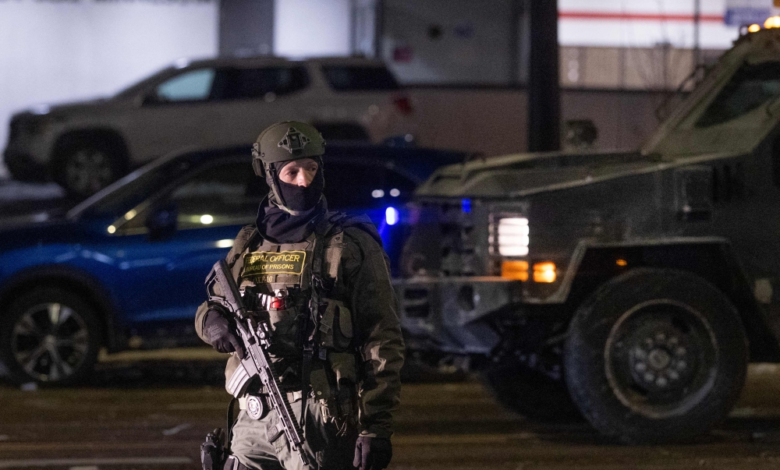
In a press statement, White House spokeswoman Carolyn Leavitt said, "No one in the White House, including President Trump, wants to see people injured or killed on the streets of America." This statement came after the fatal shooting of 37-year-old nurse Alex Pretty by federal agents on Saturday. Leavitt described the incident as a "tragedy," offering her condolences to the victim's family, saying, "We share in the family's grief. As a mother myself, I cannot, of course, comprehend the loss of a life.".
These statements come to calm the atmosphere after one of Trump's aides earlier rushed to describe the victim as a "domestic terrorist" without providing evidence, sparking a wave of criticism and controversy over the rhetoric used by the federal administration towards citizens.
Power struggles and mutual accusations
The White House didn't stop at issuing a statement of regret; it quickly moved on to a political attack, with the spokesperson accusing Trump's Democratic opponents of bearing full responsibility for the unrest in Minneapolis. Levitt indicated that these events were a direct result of what she described as the "deliberate and hostile resistance" by Democratic leaders in Minnesota to federal law enforcement efforts.
The US administration specifically blamed both Governor Tim Walz and Minneapolis Mayor Jacob Frey, accusing them of spreading "lies" about the nature of the federal agents' work. Levitt asserted that these agents "risk their lives every day to keep the worst illegal aliens off our streets," referring to the deportation and immigration enforcement campaigns ordered by the president.
Political context and impact of federal intervention
These events take on particular significance within the tense political context of the United States, where federal intervention in Democratic-run cities is a major point of contention. Historically, relations between the Trump administration and Democratic-led states have been strained, particularly regarding immigration and sanctuary cities. Observers believe the president's insistence on deploying federal forces despite local opposition reflects a desire to exert centralized control and overstep state authority, which Democrats consider a violation of the Constitution and a catalyst for violence rather than a solution.
Potential repercussions for internal security
The Minneapolis incident is expected to exacerbate political polarization in the country, especially with elections approaching. The killing of a healthcare worker by a federal agent, the initial accusation of terrorism followed by a retraction describing the incident as a tragedy, raises serious questions about the rules of engagement adopted by federal agencies within American cities. Furthermore, the ongoing exchange of accusations between the White House and state governors could erode public trust in law enforcement institutions, potentially leading to further unrest in the streets of America if a framework for cooperation that guarantees security while respecting civil rights is not established.