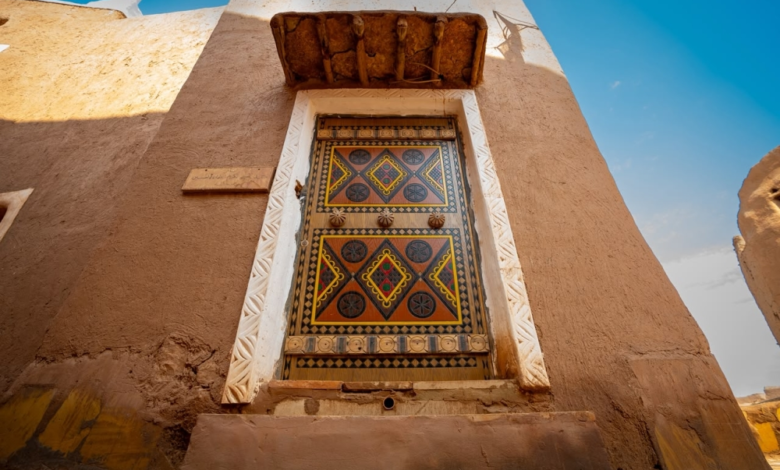

في البيوت النجدية القديمة، لم تكن الأبواب مجرد مداخل للمنازل، بل كانت لوحات فنية تحكي هوية المكان وذائقة أهله، ونقوشًا تحمل بصمة الحرفي الذي أمضى وقتاً طويلاً في تشكيل الخشب وتحويله إلى قطعة فنية خالدة. واليوم، يعيد المعهد الملكي للفنون التقليدية (وِرث) إحياء هذا الفن العريق عبر فتح باب التسجيل في دفعة جديدة من برنامج تلمذة «فنون النجارة والأبواب النجدية»، وهو أحد البرامج المتخصصة التي تهدف إلى نقل المعرفة الحرفية المرتبطة بهذه الصناعة التراثية، وتأهيل جيل جديد من الممارسين القادرين على إتقانها والمحافظة عليها.
نقوش تحكي تاريخاً: الأبواب النجدية كرمز للهوية
تعتبر العمارة النجدية جزءاً لا يتجزأ من الهوية الثقافية للمنطقة الوسطى في المملكة العربية السعودية. وتمثل الأبواب الخشبية، بزخارفها الهندسية المميزة وألوانها الترابية، عنصراً أساسياً في هذا الطراز المعماري. تاريخياً، كانت هذه الأبواب تُصنع من أخشاب محلية قوية مثل الأثل والسدر، لتتحمل الظروف المناخية الصحراوية القاسية. ولم تكن مجرد قطع وظيفية، بل كانت وسيلة للتعبير الفني والاجتماعي، حيث تعكس النقوش الدقيقة على الباب مكانة أصحاب المنزل. هذه المبادرة من معهد “وِرث” لا تهدف فقط إلى تعليم حرفة، بل إلى صون فصل مهم من فصول التراث المعماري السعودي، وضمان استمراريته في مواجهة التحديات الحديثة.
من التراث إلى الاحتراف: تفاصيل برنامج فنون الأبواب النجدية
يُقام البرنامج في مقر المعهد بمحافظة عنيزة في منطقة القصيم، حيث يعيش المتدربون تجربة عملية غامرة تمتد لـ 18 شهراً داخل الورش الحرفية المجهزة. خلال هذه الفترة، يتعلم المشاركون أسرار النجارة التقليدية، وفنون النقش والزخرفة النجدية الأصيلة، بالإضافة إلى أساليب تنفيذ الأبواب باستخدام الأدوات والتقنيات الحديثة التي تضمن الجودة والدقة، كل ذلك تحت إشراف حرفيين ومختصين ذوي خبرة طويلة في هذا المجال. لا يقتصر البرنامج على تعليم المهارات الحرفية فحسب، بل يقدم تجربة تلمذة مباشرة تعيد ربط المتدربين بأحد أبرز الفنون المرتبطة بالعمارة النجدية، وتمنحهم فرصة تحويل هذا الإرث التقليدي إلى ممارسة مهنية وإبداعية معاصرة.
صون الإرث وتمكين المستقبل
يأتي هذا البرنامج ضمن جهود «وِرث» المستمرة في صون الفنون التقليدية السعودية واستدامتها، وذلك من خلال برامج تعليمية تعتمد على التعلم بالممارسة ونقل الخبرات الحية من الحرفيين المخضرمين إلى الأجيال الجديدة. وتكتسب هذه المبادرة أهمية خاصة في إطار رؤية السعودية 2030، التي تولي اهتماماً كبيراً بالحفاظ على التراث الوطني وتعزيز الهوية الثقافية. ومن خلال تأهيل حرفيين متخصصين، يسهم البرنامج في تعزيز حضور الحرف الوطنية في المشهد الثقافي والمعماري، ويفتح آفاقاً اقتصادية جديدة للشباب السعودي، مما يضمن بقاء هذا الفن حياً ومزدهراً للأجيال القادمة.