Details of Whitkopf and Kushner's visit to the aircraft carrier Abraham Lincoln

Recent media reports have highlighted the notable visit of prominent real estate investor Steve Wittkopf and Jared Kushner, son-in-law and former senior advisor to US President Donald Trump, to the USS Abraham Lincoln aircraft carrier. This visit is particularly significant given the sensitive timing in the Middle East and the prominent positions both men hold in American political and economic circles.
General context and political background
Jared Kushner has been a pivotal figure in US foreign policy toward the Middle East in recent years, serving as the principal architect of the Abraham Accords, which reshaped the region's diplomatic landscape. The presence of a figure of Kushner's stature, accompanied by an influential businessman like Wittkopf, aboard one of the world's most powerful naval vessels, carries messages that extend far beyond a mere protocol visit. This move comes at a time when the United States is bolstering its military presence in the region by deploying aircraft carriers and naval strike groups to ensure maritime security and protect the strategic interests of its allies.
The importance of the aircraft carrier "Abraham Lincoln"
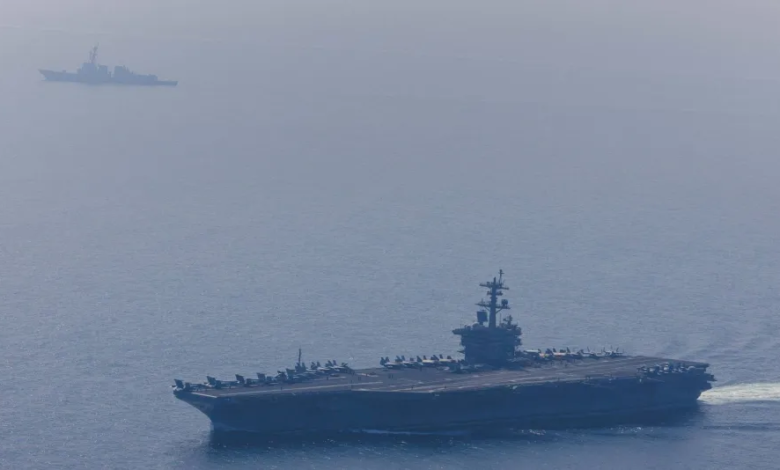
The aircraft carrier USS Abraham Lincoln (CVN-72) is a cornerstone of the U.S. Navy. This nuclear-powered Nimitz-class carrier is capable of carrying dozens of advanced fighter jets, including the F-35C stealth aircraft. Its presence within the Fifth Fleet's area of operations or in territorial waters near potential flashpoints sends a strong deterrent message to any actors seeking to destabilize the region. The visit underscores the moral and political support for U.S. armed forces deployed far from home.
Expected impact and strategic messages
Strategically, this visit reflects the continued high-level American interest in the Middle East, both from the current administration and from influential figures within the Republican Party and circles close to past and potential future decision-makers. The visit can be interpreted as a confirmation of:
- The United States' commitment to the security of the region: American military power remains a crucial factor in regional balances.
- Linking diplomacy and military power: Kushner represents the diplomatic side (peace agreements), while the carrier represents hard power, indicating that peace and stability require a force to protect them.
- Messages of reassurance to allies: Such visits to Washington's allies in the Gulf and the region confirm that the United States is strongly present and ready to deal with any emerging threats.
In conclusion, this visit cannot be separated from the broader geopolitical landscape, as American moves in the region, whether diplomatic or military, remain under the microscope of international observers due to their direct impact on energy markets, waterway security, and the future of international relations in the Middle East.