World Bank: Saudi Arabia is a model for transforming policies into economic opportunities

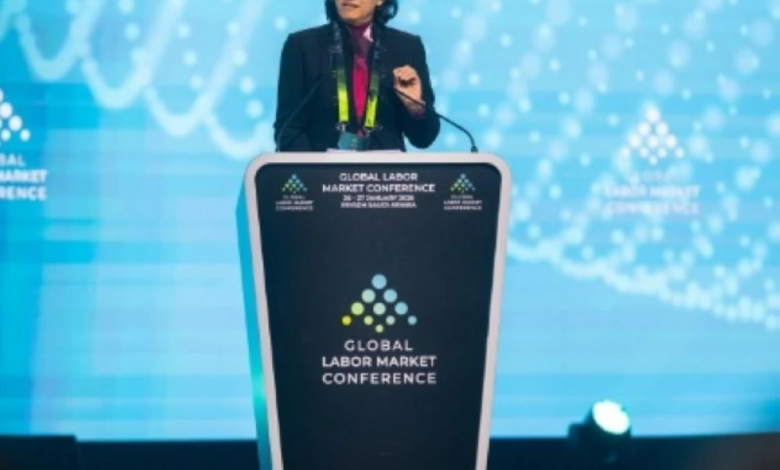
The World Bank’s Vice President for Human Development, Dr. Mamta Murthy, praised the Saudi model in managing economic transformations, stressing that the strategic partnership between the Kingdom of Saudi Arabia and the World Bank is a globally exemplary model for how to transform evidence-based policies into tangible economic opportunities that serve companies of all sizes and contribute directly to job creation and human capital development.
The context of economic transformation and Vision 2030
These statements come at a time when the Kingdom is witnessing unprecedented economic activity under the umbrella of "Saudi Vision 2030," which has placed labor market reform and human capital development at the heart of its strategic objectives. Over the past few years, the Kingdom has succeeded in reducing unemployment rates and increasing women's participation in the workforce, making its experience a focus of attention for international institutions. The convening of the third edition of the International Labour Conference in Riyadh is a testament to the pivotal position the Kingdom has attained as a global platform for discussing employment challenges and the future of work.
Sustainable investment in human capital
In her address at the conference, Dr. Murthy explained that developing workforce systems to keep pace with the rapid changes in the global economy is no longer an option but an urgent necessity. She emphasized that the private sector plays a pivotal role in leading this transformation to achieve inclusive and sustainable job growth. She indicated that sustainable investment in people is the cornerstone for unlocking the full potential of human capital, noting that this approach requires a radical restructuring of financing mechanisms and the adoption of innovative models for implementing workforce transformation programs.
Global challenges and realistic solutions
The international official reviewed the differences in labor market challenges and opportunities across geographical regions, noting that areas such as sub-Saharan Africa and South Asia possess enormous demographic potential to drive future growth, provided that young people are equipped with skills that truly align with market needs. She highlighted global structural challenges, most notably the focus of traditional education systems on inputs rather than outputs and outcomes, the continued training for jobs that may become obsolete, and the significant gap between available skills and those actually required.
Three major shifts and a new indicator
To address these challenges, Dr. Murthy outlined a roadmap based on three key transformations: adopting private sector-led solutions, embedding market-based approaches to create opportunities across value chains, and prioritizing sectoral reforms as a prelude to comprehensive reform. She also revealed that the World Bank's agenda has expanded to include the development of a "new Human Capital Index" that integrates higher education and on-the-job learning, enabling governments to more accurately diagnose skills gaps.
Murthy concluded her remarks by announcing the World Bank’s intention to issue a specialized report documenting Saudi Arabia’s progress in labor market reforms, to serve as an international reference in the field of skills development and successful labor policies.