Documenting human rights violations in the Hadramawt coast: National Committee report

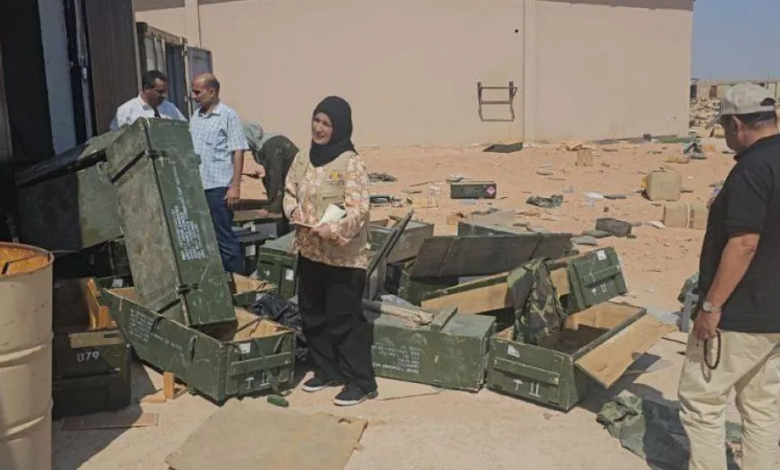
The National Commission to Investigate Alleged Human Rights Violations in Yemen has concluded its intensive field visit to the districts of the Hadramawt coast, which aimed to monitor and document a series of serious violations against civilians in the region. This initiative is part of the Commission's ongoing efforts to ensure that perpetrators do not escape punishment and to secure the rights of victims in legal and judicial proceedings.
Details of the field visit and documentation
During its field visit, the committee team listened directly to testimonies from victims and their families, in addition to collecting eyewitness accounts of various incidents, including arbitrary arrests, enforced disappearances, and attacks on public and private property. The committee also held extensive meetings with judicial and security officials in the governorate to discuss the legal procedures in place and their compliance with international human rights conventions, and to review the conditions of detainees in central prisons and detention centers.
General context and historical background
Hadhramaut Governorate, particularly its coastal areas, holds significant strategic and geopolitical importance on the Yemeni map, representing a major economic and geographical force. Since the liberation of Mukalla and the coastal regions from al-Qaeda control in 2016, the area has witnessed significant security and military developments. Despite relative stability compared to other conflict zones in Yemen, the human rights situation continues to face intermittent challenges related to security measures and the treatment of political opponents and activists, prompting ongoing intervention from human rights organizations and the National Commission to Investigate Violations.
The importance of documentation and its legal impact
The significance of this documentation lies in its role as a cornerstone for any future transitional justice process in Yemen. Professional and impartial monitoring is the first step towards providing redress and compensation for victims. Domestically, these reports contribute to exerting pressure on local authorities and security forces to improve their conduct and adhere to applicable laws. Internationally, the National Commission's reports serve as a key reference for the UN Human Rights Council and the international community in assessing the human rights situation in Yemen and determining the legal responsibilities of the various parties.
Towards strengthening the rule of law
Observers affirm that the continued work of investigative committees and their access to various Yemeni regions, including liberated areas, strengthens the principle of accountability. This activity indicates that human rights cases do not expire with time, and that documenting violations in the Hadramawt coast sends a clear message that security and stability cannot be achieved without respect for human dignity and fundamental rights guaranteed by the Yemeni constitution and international humanitarian law.