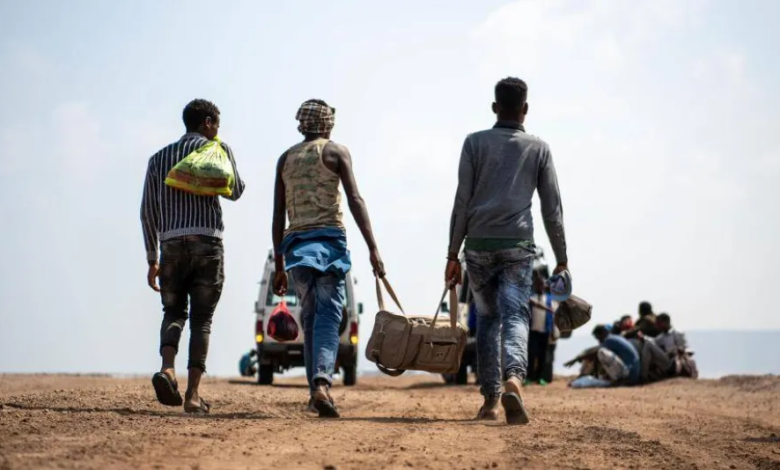

Despite years of war and internal conflict, Yemen remains one of the busiest transit points for waves of illegal migration from the Horn of Africa. Consistent international and local reports reveal that Yemeni shores receive tens of thousands of migrants annually, a striking paradox as these individuals seek refuge in a country suffering one of the world's worst humanitarian crises, using it as a bridge to reach the oil-rich Gulf states.
The Eastern Route: A Journey in Search of Hope Amidst Danger
This route, known as the "Eastern Route," is one of the busiest and most dangerous migration corridors in the world. Migrants, the vast majority from Ethiopia and Somalia, embark on perilous journeys across the Gulf of Aden or the Red Sea. According to the International Organization for Migration (IOM), economic hardship, ethnic conflicts, and drought in their countries of origin drive thousands to risk their lives crossing the sea in flimsy smugglers' boats, often operated by human traffickers who disregard even the most basic safety standards.
Security vacuum and the growth of smuggling networks
The fragile security situation in Yemen, coupled with the absence of central government authority over vast stretches of the coast and borders, has transformed the country into a fertile ground for human trafficking and smuggling networks. Smugglers exploit the chaos to transport migrants across Yemeni territory, through the southern and central governorates, to the northern border regions with Saudi Arabia. This overland journey is no less perilous than the sea crossing, as migrants are subjected to extortion by gangs, forced detention, and harsh humanitarian conditions, in addition to the risk of being caught in armed conflict zones.
Humanitarian and regional repercussions
The repercussions of the migrant influx extend far beyond the humanitarian crisis of frequent drownings and deaths from thirst in the desert. It places immense pressure on host communities in Yemen, already struggling with scarce resources and collapsing services. This issue also casts a long shadow over neighboring countries, necessitating high-level international coordination to address the root causes of the problem in the countries of origin, support Yemen in securing its borders and coastlines, and provide safe passage or voluntary return solutions for stranded migrants.
The continued flow of migrants at this rate underscores the urgent need for a comprehensive approach that goes beyond temporary security solutions, focusing on sustainable development in the Horn of Africa and restoring stability in Yemen, to ensure that this gateway of death is closed and migration routes are transformed into regular and safe channels.