Yemeni Presidential Council revokes Al-Bahsani's membership: Details and repercussions of the decision

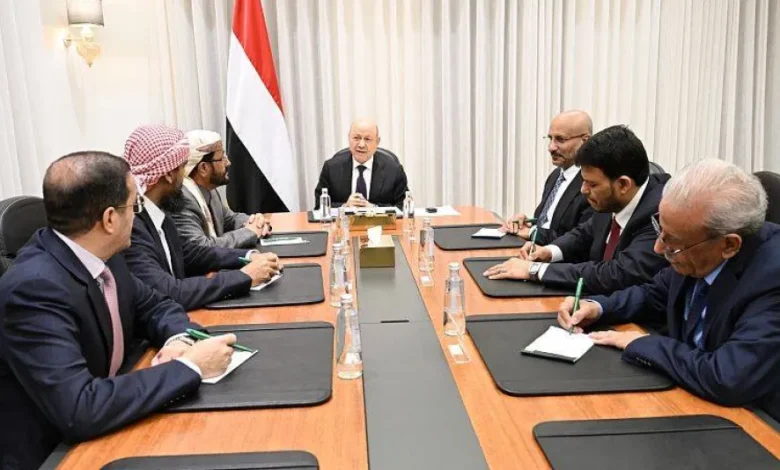
In a significant development in the Yemeni political landscape, news of the Presidential Leadership Council's decisions has dominated headlines. Sources indicate that Major General Faraj Salmeen al-Bahsani has been removed from the council, and efforts are underway to fill the resulting vacancies. This event comes at a sensitive time for the Republic of Yemen, amidst intensive regional and international efforts to unify the republican ranks and end the ongoing conflict.
Background to the formation of the Presidential Leadership Council
To understand the implications of this decision, it is necessary to return to the historical context of the council's formation. The Yemeni Presidential Leadership Council was established on April 7, 2022, following the declaration of the transfer of power in the Saudi capital, Riyadh. This formation was a crucial step towards unifying the various forces opposed to the Houthi group under a single umbrella. The council included leaders representing diverse political and military factions, including the Southern Transitional Council, the National Resistance, and leaders from Hadramawt and Marib, and was headed by Dr. Rashad al-Alimi.
Internal challenges and council cohesion
Since its inception, the council has faced significant challenges related to integrating military and security formations and unifying political decision-making. Differences in vision among council members have always been expected, given the diverse political backgrounds and partisan agendas of the participating groups. Major General Faraj al-Bahsani, who previously served as governor of Hadramawt and commander of the Second Military Region, is a key figure in the Yemeni equation due to the strategic and geographical importance of the oil-rich and resource-rich Hadramawt Governorate.
Strategic importance and expected impact
Any change to the structure of the Presidential Leadership Council carries profound implications at both the local and regional levels. Locally, this decision could lead to a redrawing of alliances within the legitimate government's camp, particularly regarding the representation of the eastern governorates. Regionally, the stability and cohesion of the Council are crucial to the efforts led by the Arab Coalition and the UN envoy to advance the peace process. Filling the vacancies requires careful consensus to ensure that no political or administrative vacuum arises that could hinder the Council's ability to address current economic and military challenges.
The future of the political landscape
Attention is now focused on the Council's next steps and how it will address the repercussions of this decision. Maintaining the Council's unity and strengthening state institutions remains the paramount objective to ensure the restoration of the state and the achievement of stability, given the humanitarian and economic situation which demands the concerted efforts of all national stakeholders.