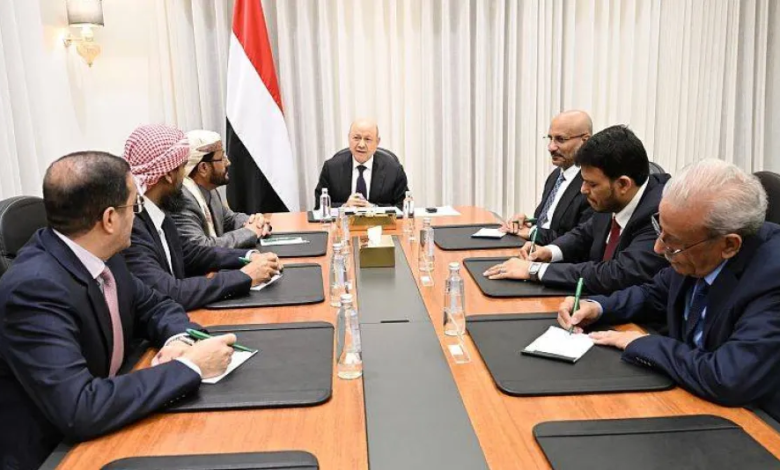
Yemeni Presidential Council revokes Al-Bahsani's membership: Details of the decision and its repercussions

The Yemeni political scene witnessed a significant development with the news of the Presidential Leadership Council's decision to dismiss Major General Faraj Salmeen Al-Bahsani from his position, citing his alleged dereliction of national duty and failure to fulfill his assigned tasks. This decision comes at a highly sensitive time for the Republic of Yemen, as the various factions operating under the umbrella of legitimacy strive to unify their ranks to confront the current political, military, and economic challenges.
General context and formation of the Presidential Leadership Council
To understand the implications of this decision, it is necessary to return to the historical context of the formation of the Yemeni Presidential Leadership Council. The council was established on April 7, 2022, following the declaration of the transfer of power from former President Abd Rabbuh Mansur Hadi, at the conclusion of Yemeni-Yemeni consultations held in the Saudi capital, Riyadh, under the auspices of the Gulf Cooperation Council. The new formation, headed by Dr. Rashad al-Alimi and comprising seven other members representing various influential forces on the ground, aimed to end divisions within the legitimate government's camp and unify military and political efforts to manage the transitional phase and restore the state.
The importance of Hadramawt and the political weight of Al-Bahsani
Major General Faraj al-Bahsani wields considerable political and military influence, having previously served as governor of Hadramawt Governorate and commander of the Second Military Region. Hadramawt holds paramount strategic importance as the largest governorate in Yemen and a vital economic hub for the country, thanks to its oil wealth and strategic location. Strong representation from this governorate has long been essential for maintaining political balance within the Presidential Council to ensure stability in the liberated areas.
Internal challenges and council cohesion
Since its inception, the Presidential Leadership Council has faced numerous challenges stemming from differing visions among its members, who belong to various political and military factions, including the Southern Transitional Council, the Giants Brigades, the National Resistance, and the Islah Party. Past periods have witnessed divergent views on mechanisms for governing the state, integrating military and security formations, and allocating resources, sometimes leading to members suspending their participation in meetings.
Expected impacts locally and regionally
This decision is expected to cast a shadow over the local landscape in the southern and eastern governorates, particularly in Hadramawt. This change could lead to a reshaping of political alliances within the legitimate government's camp, amid concerns about its impact on the cohesion of the anti-Houthi front. Regionally and internationally, the international community and the United Nations are closely monitoring these developments, as the stability of the Presidential Leadership Council is considered a cornerstone of any future peace efforts or negotiations to end the conflict in Yemen. Maintaining the unity of the Council is a fundamental requirement for the countries sponsoring the political process to ensure that the liberated areas do not descend into administrative chaos or internal conflicts.