Yemen: War remnants found at sites where the Southern Transitional Council withdrew

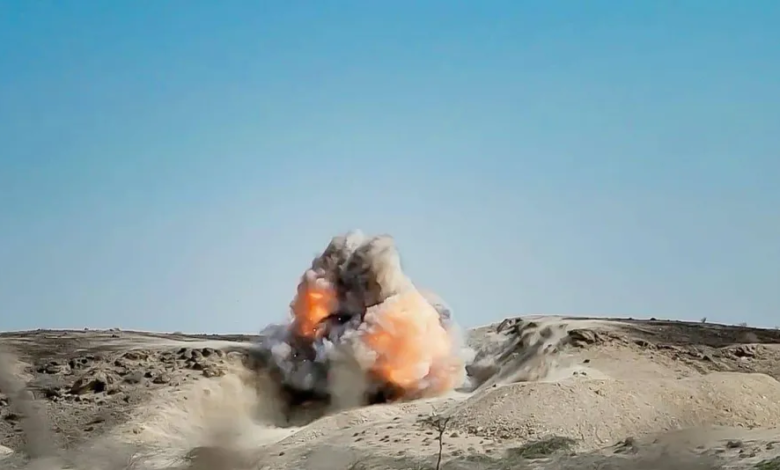
Field and security sources in Yemen reported the discovery of quantities of unexploded ordnance and various types of shells in areas and military sites recently vacated by forces of the Southern Transitional Council. These discoveries come as part of ongoing clearing and security operations conducted by relevant authorities to ensure the safety of civilians and the return of normal life to these areas, amidst continued warnings about the dangers posed by unexploded ordnance left behind by years of conflict.
Details of the discoveries and engineering efforts
Specialized engineering teams began their work immediately after the sites were evacuated, identifying and dismantling a number of shells and improvised explosive devices that posed an imminent threat. These procedures are a routine and necessary part of the Yemeni landscape, where military movements and withdrawals often leave behind a heavy legacy of neglected or forgotten military equipment, which, over time, becomes a death trap for civilians, especially children and farmers returning to inspect their lands and homes.
General context: The conflict in the south and the Riyadh Agreement
To understand the dimensions of this event, one must consider the political and military context in southern Yemen. The Southern Transitional Council (STC) plays a pivotal role in the southern governorates, and its relationship with government forces has been marked by periods of tension and clashes, followed by de-escalation and redeployment agreements, most notably the Riyadh Agreement. These withdrawals and redeployments typically aim to implement the military aspects of agreements intended to unify efforts in confronting the larger challenges facing the country. However, the remnants of military presence remain a logistical and security challenge that hinders immediate stability.
The danger of landmines and war remnants in Yemen
Yemen is one of the most heavily mined countries in the world due to years of ongoing conflict. International and UN reports indicate that thousands of civilians have fallen victim to these remnants. Therefore, the discovery of unexploded ordnance in areas where any military faction has withdrawn is not merely a passing incident, but rather highlights a profound humanitarian crisis requiring intensive international and local efforts to clear the land. The presence of these projectiles in areas formerly controlled by military groups reflects the scale of military buildup and the absence of rigorous protocols for managing surplus military equipment during tactical withdrawals.
The security and humanitarian importance of securing the areas
This event is of paramount importance both locally and from a humanitarian perspective. Securing the areas from which the Southern Transitional Council or any other party withdraws is the first step toward normalizing the situation. Without removing these remnants of war, the return of displaced persons remains fraught with danger, and development and infrastructure projects will be disrupted. Furthermore, leaving these munitions unsecured could make them vulnerable to falling into the hands of extremist groups or sabotage gangs, thus perpetuating violence and threatening the fragile civil peace in the southern governorates and Yemen as a whole.