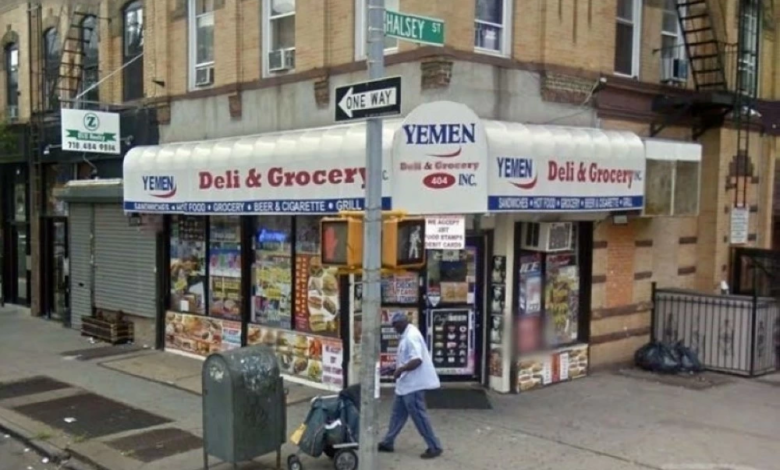

In an announcement reflecting the growing economic influence of Arab communities in the United States, the US Embassy in Yemen today (Tuesday) revealed striking figures regarding the control of Americans of Yemeni origin over the vital retail sector in one of the world's largest cities.
The embassy confirmed in official posts on its “X” platform that Americans of Yemeni origin own up to 50% of grocery stores in New York City alone, including those densely populated in the famous Brooklyn neighborhood, noting that this presence effectively contributes to supporting neighborhoods by providing job opportunities and enhancing the spirit of the local community.
The "Bodega" phenomenon and Yemeni control
This figure is not just a passing statistic; it reflects a historic shift in the management of small grocery stores known as "bodegas" in New York City. Historically, these stores were run by immigrants from Puerto Rico and the Dominican Republic, but since the 1990s, Yemeni immigrants have begun to enter the sector in force. These stores are a lifeline for New Yorkers, often operating 24 hours a day and providing everything from morning coffee to emergency household supplies, making the Yemeni shopkeeper a familiar and essential face in the daily lives of New Yorkers.
Conflicting statistics and geographical spread
Regarding demographics, official and estimated figures for the number of Americans of Yemeni descent are inconsistent. While 2020 statistics indicate approximately 91,000 people of Yemeni origin or born in Yemen, community sources and NGOs estimate the actual number to be between 100,000 and 200,000. This discrepancy is often attributed to challenges in classifying Arab origins within federal statistics.
The Yemeni community is concentrated mainly in two key states, New York (specifically in Brooklyn and the Bronx) and Michigan (in Dearborn and Hamtramck), where they have formed strong communities that have maintained their cultural identity while integrating into the American economic cycle.
Historical background and cross-border influence
Yemeni immigration to the United States dates back to early periods, but it experienced significant surges in the 1970s and 1990s. While many of the first immigrants went to work in auto factories in Detroit and Michigan, others chose the free trade sector in New York and California. The success of Yemenis in the grocery industry in New York is a testament to their entrepreneurial spirit and perseverance, with many starting as employees and eventually growing up to own their own stores.
The impact of this success is not limited to the American interior, but extends to be a fundamental pillar of the Yemeni economy, as the financial remittances sent by Yemeni expatriates from the United States are a vital source of hard currency and a lifeline for thousands of families in Yemen in light of the difficult economic conditions the country is going through.