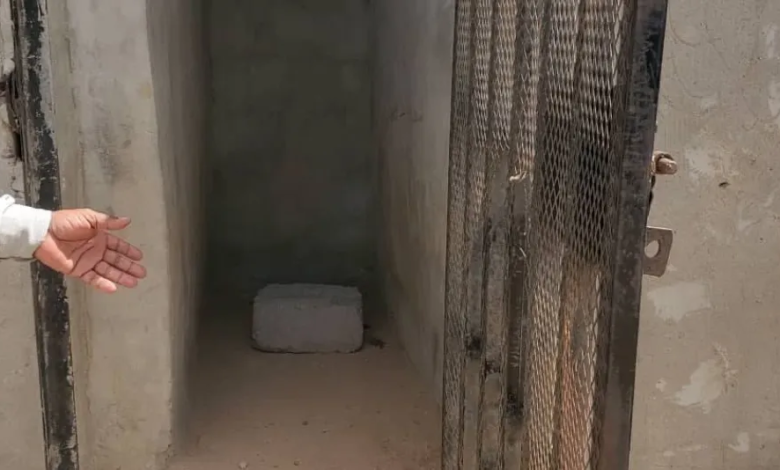

A specialized Yemeni committee recently concluded its field mission in the Socotra archipelago, which focused primarily on documenting and inspecting detention centers and monitoring alleged human rights violations in the province. This step comes within the framework of efforts to strengthen legal accountability and ensure the application of human rights standards in liberated areas, amid increasing reports of legal abuses against civilians and activists.
Field mission details
According to official sources, the committee team conducted inspection visits to the central prison and several detention centers run by security agencies on the island. These visits aimed to closely examine the conditions of detainees, verify the legality of arrest procedures, and assess the availability of necessary healthcare and humanitarian aid. The committee also held a series of meetings with judicial and security officials, in addition to hearing testimonies from a number of victims and their families, in order to document the facts and build a comprehensive legal file on the human rights situation in the archipelago.
General context: Socotra at the heart of the power struggles
These human rights movements cannot be separated from the broader context that has prevailed in Socotra Governorate for years. The archipelago, a UNESCO World Heritage Site renowned for its unique biodiversity, has become an arena for political and military conflict in recent years. The island has witnessed escalating tensions between the internationally recognized Yemeni government and the Southern Transitional Council, leading to shifts in security and administrative control. These fluctuations have created fertile ground for human rights reports alleging the existence of unofficial detention centers, arbitrary arrests outside the framework of the law, and restrictions on public freedoms, prompting efforts to investigate these claims.
The importance of documentation and its expected impact
The work of this committee is of paramount importance both locally and internationally. Locally, this documentation represents a necessary step towards achieving justice for victims, restoring the rule of law, and curbing the influence of armed groups operating outside the framework of the state. Internationally, reports issued by such committees serve as an important reference for international organizations and the UN Human Rights Council, shedding light on the state of freedoms in areas far removed from the direct media spotlight.
The committee is expected to submit a detailed report containing the necessary recommendations to higher authorities, with the aim of addressing existing imbalances, closing any detention centers that are not under the supervision of the Public Prosecution, and ensuring that perpetrators of violations do not escape punishment, thus restoring to Socotra its historically known civil and peaceful character.