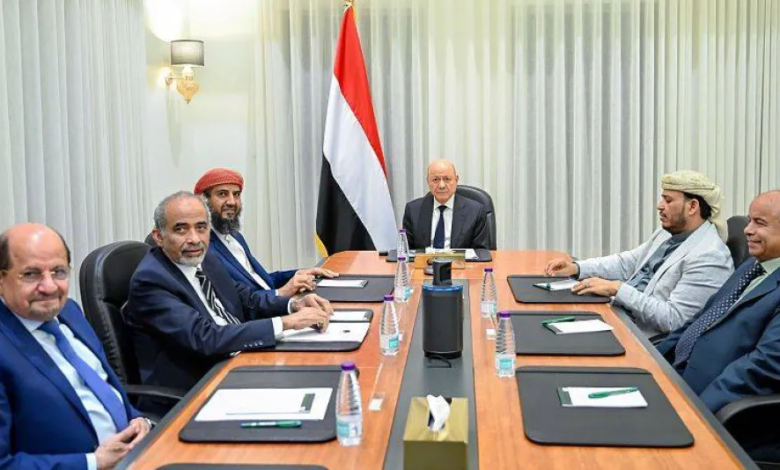
Challenges facing the new Yemeni government and the appointment of al-Zindani: An analytical reading

The internationally recognized Yemeni government faces a pivotal moment in its political history, particularly following the recent cabinet reshuffle that saw Dr. Shaya'a Mohsen al-Zindani appointed Minister of Foreign Affairs and Expatriate Affairs. This government activity comes at a time when Yemen is experiencing one of its most complex junctures since the outbreak of war, with political and economic issues intertwined with escalating military tensions, thus presenting the government with a true test of its ability to maneuver and manage crises.
Context of the conflict and historical background
The current situation cannot be understood in isolation from the historical context of the conflict that has been tearing Yemen apart since the Houthi group's coup in late 2014. After years of war that led to the intervention of the Arab Coalition and the formation of the Presidential Leadership Council in April 2022—a move intended to unify the anti-Houthi front—the recent appointments, including that of al-Zindani as foreign minister, represent an attempt to inject new blood into Yemeni diplomacy. Through these steps, the government seeks to revitalize its role in international forums and garner support to address current challenges, amidst a stalemate in the UN-led peace process.
The economic file: The most prominent challenge
Perhaps the most formidable obstacle facing the current government is the unprecedented economic collapse. The government is suffering from a severe shortage of financial resources due to the halt in crude oil exports, the main artery of the national budget, following attacks by the Houthi group on export terminals in Hadramawt and Shabwa. This situation has led to a dramatic depreciation of the national currency (the Yemeni rial) against foreign currencies in the liberated areas, exacerbating the suffering of citizens and causing a dramatic rise in the prices of basic commodities. This places the government under immense public pressure to find urgent solutions.
Regional tensions and their impact on the peace process
The government's challenges extend beyond the local level, intertwined with regional and international complexities. The Houthi escalation in the Red Sea and Bab al-Mandab, and their targeting of international shipping lanes, have complicated matters and hindered the peace efforts led by Saudi Arabia and Oman. The government and diplomatic team find themselves required to adopt a balanced stance that preserves Yemeni sovereignty while simultaneously ensuring continued international support, emphasizing that securing maritime navigation is inseparable from supporting the legitimate government in regaining control over all Yemeni territory.
The importance of the stage and its expected impact
The success or failure of the government at this stage is of paramount importance not only to Yemen but to the entire region. Restoring stability to state institutions, improving services, and unifying military and security decision-making are essential pillars for preventing the country from sliding into widespread chaos that could threaten the security of neighboring countries and international waterways. The government's ability, with its new faces and diplomatic expertise embodied by al-Zindani and others, to navigate these political minefields will determine the future of Yemen for years to come: either a breakthrough that lays the foundation for lasting peace, or a continuation of the cycle of conflict and attrition.