The Yemeni Presidential Council warns the Houthis of the repercussions of the Iranian war

The Yemeni Presidential Council and developments in the regional landscape
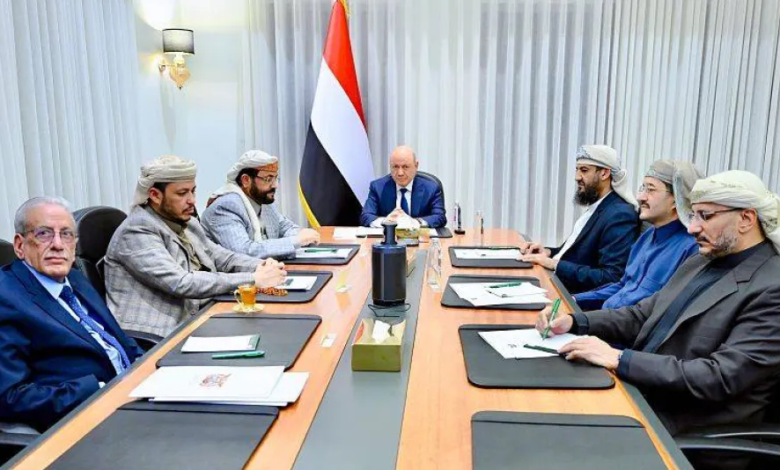
The Yemeni Presidential Leadership Council held intensive meetings to discuss the rapidly evolving situation in the region, particularly the repercussions of Iranian escalation and the proxy wars waged by Tehran. In this context, the Council issued strong warnings to the Houthi militia against continuing its military escalation and exploiting regional tensions to serve foreign agendas that have no connection to Yemeni national interests. The Council emphasized that aligning with the Iranian axis threatens to undermine all efforts to achieve a comprehensive and just peace in Yemen.
General context and historical background of Iranian interventions in Yemen
The roots of the current Yemeni crisis can be traced back to late 2014 when the Houthi militia overthrew the legitimate government and seized control of the capital, Sana'a, by force. Since then, Iran has played a key role in prolonging the conflict by providing military, financial, and logistical support to the Houthis, including supplying them with drones and ballistic missiles. The Yemeni Presidential Leadership Council was established in April 2022, headed by Dr. Rashad al-Alimi, with the aim of unifying the republican ranks, confronting this expansionist project, and working to restore state institutions and end the coup, whether through the UN-sponsored peace process or by defending the country's security and stability.
The importance of the event and its expected impact on various levels
The warnings issued by the Yemeni Presidential Council are of paramount importance in light of the current circumstances, as the repercussions of this escalation extend beyond Yemen’s geographical borders to encompass multiple local, regional, and international dimensions.
Local impact: worsening humanitarian and economic crisis
Domestically, the Houthis' continued implementation of the Iranian agenda is complicating the political landscape and obstructing the UN roadmap for peace. This escalation is also having a disastrous impact on the already collapsing economy, exacerbating the suffering of millions of Yemenis who are facing one of the world's worst humanitarian crises, as efforts to pay salaries, reopen roads, and normalize public life are disrupted.
Regional impact: Threat to neighborhood security and maritime navigation
Regionally, the transformation of Yemen into a launching pad for attacks and threats against neighboring countries poses a grave danger to Arab national security. Furthermore, the militarization of the Red Sea and the Bab el-Mandeb Strait by the Houthis, with Iranian support, threatens maritime security, placing the entire region on a knife's edge and increasing the likelihood of wider military confrontations that could draw other countries into the conflict.
International impact: Disruption of global supply chains and trade
Internationally, the international community is watching developments in Yemen with great concern, as any threat to strategic waterways directly disrupts global supply chains and increases insurance and shipping costs. This situation has prompted major powers to form maritime coalitions to protect navigation, underscoring that stability in Yemen is not merely a domestic matter, but an imperative for international peace and security.
A call to the international community
At the conclusion of its discussions, the Yemeni Presidential Council reiterated its demand that the international community and the United Nations take firm and decisive action to halt Iran's blatant interference in Yemeni affairs. It stressed the necessity of cutting off the flow of Iranian weapons to the Houthis and supporting the legitimate Yemeni government in extending its control over all national territory, considering this the only way to guarantee the stability of Yemen and the region and secure international shipping lanes.