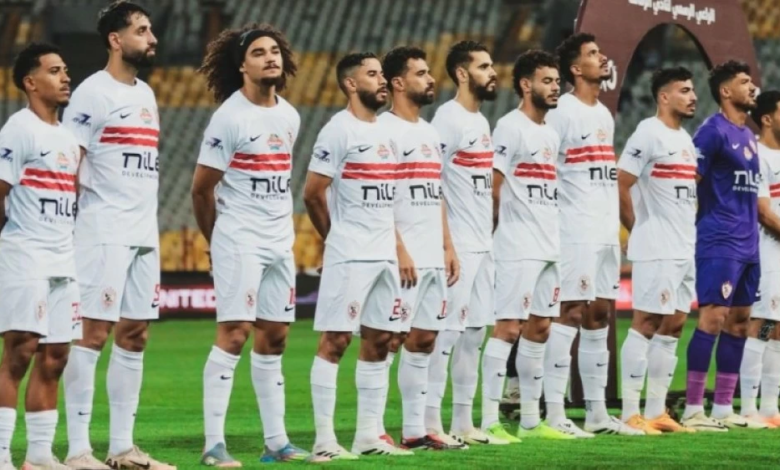

Zamalek, one of the giants of Egyptian and African football, is facing a new administrative and technical crisis that threatens the stability of its first team. The club received official notification of a transfer ban for the seventh time in its recent history. This decision is the latest chapter in a series of financial crises plaguing the White Knights, stemming from accumulated debts and outstanding payments owed to former players and coaches. This places the board of directors in a very difficult position at a critical juncture in the season.
Background of the crisis and history of international sanctions
The decision to suspend player registration was not a spur-of-the-moment decision, but rather the culmination of years of legal disputes within the halls of FIFA. Zamalek suffers from a heavy legacy of cases related to outstanding payments owed to former foreign players, in addition to fines levied against successive coaches who did not receive their full dues upon leaving the club. FIFA follows a very strict policy regarding clubs' financial obligations, with penalties starting with warnings, then financial fines, and escalating to a transfer ban for specific transfer windows (usually three) until debts are settled. Penalties can worsen, potentially leading to point deductions or relegation to lower divisions in cases of persistent intransigence, something Zamalek officials are striving to avoid at all costs.
The artistic impact on the team's journey
This transfer ban represents a significant blow to the team's ambitions. While the squad desperately needs reinforcements in specific positions to compete for domestic titles (the Egyptian Premier League and the Egypt Cup) and continental titles (the CAF Confederation Cup), the coaching staff finds itself constrained and unable to add new players. The transfer ban means the club cannot register any new signings until the restrictions are lifted, forcing the coach to rely entirely on the current squad and youth academy players to fill the gaps. This may not be enough given the pressure of matches and the fierce competition from arch-rivals Al Ahly and other league clubs that are constantly strengthening their squads.
Economic and administrative dimensions
Economically, this crisis places immense pressure on the club's resources. Lifting the suspension requires a massive influx of funds, often in hard currency (dollars or euros), to pay the fines owed to FIFA and the complainants. This necessitates extraordinary efforts from the board to generate revenue, whether through sponsorship deals, player sales, or donations from fans and business associates. The fact that this crisis has recurred for the seventh time underscores the urgent need to restructure the club's administrative and financial systems to prevent a recurrence of such scenarios that drain the club's resources and threaten its future.
In conclusion, Zamalek's vast fan base in Egypt and the Arab world is awaiting the administration's moves to resolve this dilemma, hoping to end the debt nightmare that haunts their club, so that the focus can return once again to the green field and the podiums of victory.