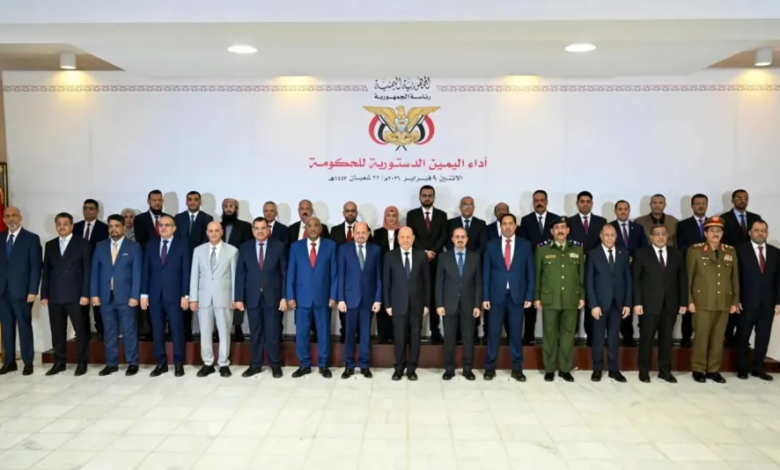
The Yemeni government, and at its heart the Ministry of Foreign Affairs and Expatriates led by Dr. Shaya al-Zindani, faces its most difficult test yet: confronting a deeply entrenched system of administrative and financial corruption that has accumulated over years of war and conflict. This challenge comes at a highly sensitive time, as local and international attention is focused on the government's commitment to implementing genuine structural reforms that can salvage what remains of state institutions.
General context and historical background of the crisis
Corruption in Yemen was not a recent phenomenon; rather, it is the product of decades of administrative decay that worsened catastrophically after the outbreak of war in 2015. Institutional fragmentation and the absence of effective oversight led to the emergence of complex networks of vested interests that exploited the state's absence to maximize their personal gains at the expense of the public interest. The current government inherited a heavy burden, including an inflated public sector workforce, particularly in the diplomatic corps, as well as haphazard appointments and unjustified spending in hard currency, which has constituted a continuous drain on the state's already scarce resources.
The importance of reforms and their local and regional impact
The actions of Minister Al-Zindani and the government in general are of paramount importance at this time for several reasons:
- Domestically, combating corruption is the top priority for the Yemeni public, who are suffering from collapsing services and a plummeting national currency. Any success in streamlining expenditures and restructuring institutions will positively impact exchange rate stability and ensure the availability of necessary liquidity for essential services.
- At the regional and international levels, international donors and allied nations, particularly Saudi Arabia and the United Arab Emirates, link continued economic support and financial deposits to the Yemeni government's commitment to transparency and governance standards. Therefore, confronting corruption is not merely an administrative option, but an existential prerequisite for ensuring continued international support and averting total economic collapse.
Expected challenges and upcoming scenarios
Observers recognize that dismantling this system will not be easy. Any reform measures will face fierce resistance from those who benefit from the status quo, who may use their political or tribal influence to obstruct decisions. However, the current opportunity, supported by the Presidential Leadership Council and popular momentum, may be the most opportune for making a real breakthrough in the wall of corruption. The government's success, particularly in the foreign affairs and diplomacy sector, will restore confidence in state institutions and pave the way for a new phase of economic and political recovery.