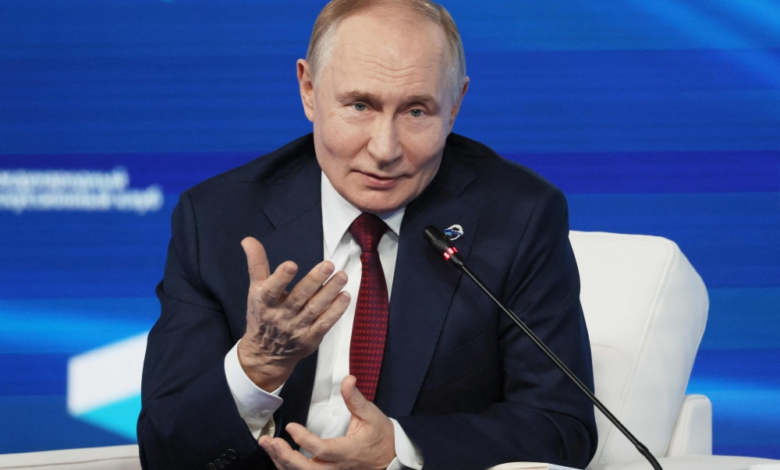
Zelensky denies targeting Putin's headquarters: A Russian lie to sabotage negotiations

In a new escalation of tensions coinciding with diplomatic efforts, Ukrainian President Volodymyr Zelenskyy categorically denied Moscow's accusations that Kyiv launched a large-scale drone attack on the residence of Russian President Vladimir Putin . This denial comes at a highly sensitive time, as international actors seek to push for a political settlement to end the ongoing conflict.
Details of the Russian accusations and the threat of retaliation
Moscow announced on Monday that President Putin's official residence in the Novgorod region, located between Moscow and St. Petersburg, was the target of a nighttime attack it described as "terrorist." Russian Foreign Minister Sergey Lavrov stated via Telegram that Russian forces intercepted 91 drones targeting the residence. Lavrov emphasized that this attack would not go unanswered, indicating that Russia intends to review its position in the ongoing negotiations with the United States, thus jeopardizing the entire peace process.
Zelensky: A pretext for a new escalation
For his part, Zelensky described the Russian account as a “lie,” asserting that the Kremlin was fabricating these scenarios to pave the way for new and violent missile attacks on the capital, Kyiv, and other Ukrainian cities. During an online press conference, the Ukrainian president indicated that the timing of these accusations was not coincidental, coming the day after his important meeting with US President-elect Donald Trump in Florida, suggesting a Russian attempt to undermine diplomatic efforts and obstruct any rapprochement that could lead to a ceasefire.
The diplomatic context and Trump's position
Commenting on the incident, Donald Trump explained that Putin informed him of the attack while in a state of extreme anger. Trump remarked that "this is not the time to do something like this," alluding to the sensitivity of the current situation. These developments come amidst intensive behind-the-scenes negotiations that have been ongoing since last November, aimed at ending the deadliest war in Europe since World War II.
The repercussions of the event on the course of the war
Observers believe that targeting high-level command headquarters, whether real or staged, constitutes a crossing of red lines in military and political norms, and is often used as a pretext to escalate military operations. The international community fears that Moscow will use this incident as a pretext to freeze negotiations or launch large-scale retaliatory strikes, thus returning the conflict to square one and dashing hopes pinned on recent diplomatic efforts led by Washington to end the conflict.