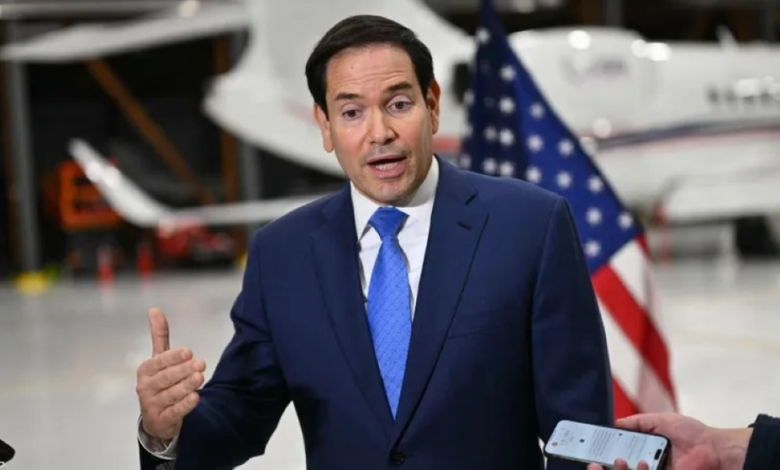

US Secretary of State Marco Rubio confirmed the United States' readiness to engage in diplomatic talks with Iran this week, while emphasizing that any productive dialogue must extend beyond the nuclear issue to include Tehran's missile arsenal and its destabilizing activities in the region. These statements come at a sensitive time, marked by major geopolitical shifts in the Middle East.
Strict US conditions for meaningful talks
Speaking to reporters on Wednesday, Rubio clarified that Washington is open to direct talks if the Iranian side demonstrates genuine seriousness, stating, "If the Iranians want to meet, we are ready." However, Rubio outlined specific conditions for the success of these negotiations, emphasizing that they must include non-negotiable issues, most notably the range of Iran's ballistic missiles, which pose a direct threat to allies, Tehran's support for designated terrorist organizations, and the human rights situation and the regime's treatment of its own people.
These conditions reflect a shift in US strategy, which previously focused primarily on the nuclear program, as the current administration, led by President Donald Trump, seeks to address all sources of the Iranian threat in one package, backed by a large military buildup near the Iranian coast as a clear deterrent message.
A tense regional context and declining Iranian influence
This call for talks comes amid unprecedented regional circumstances that are placing Tehran under immense pressure. Historically, Iran has relied on a network of regional proxies to project its influence and leverage it against the West, but the landscape has fundamentally changed. Tehran has lost strategic allies, particularly with reports indicating the potential fall of Syrian President Bashar al-Assad's regime and the significant decline in Hezbollah's capabilities in Lebanon, depriving Iran of its strategic depth in the Levant.
Observers believe that this regional isolation, coinciding with internal pressures and popular protests that were met with repression, may force the Iranian leadership to make concessions that it previously refused, such as discussing its missile program, which it has long considered a red line and a tool for self-defense.
The importance of the talks and their expected impact
These anticipated talks are of paramount importance to international peace and security, as reaching a comprehensive agreement could avert an open military conflict in the region and contribute to the stability of global energy markets and the security of maritime navigation in the Strait of Hormuz. Regionally, the Gulf states and Israel are closely watching the outcome of these talks, with Washington seeking to reassure its allies that any agreement will ensure the containment of Iran's offensive capabilities.
Meeting arrangements in Muscat
Regarding logistical arrangements, Iranian state media reported that the talks would be held on Friday in Oman, which has long played the role of a trusted mediator between the two sides. Rubio noted that US envoy Steve Wittkopf had been prepared to meet in Turkey, but conflicting reports about Tehran's approval prevented this, leading to Muscat being chosen as the venue for the negotiations.