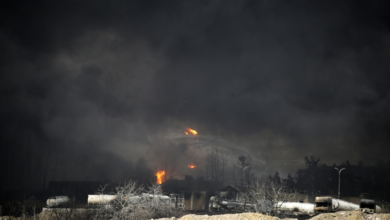

Details of the Honshu Island earthquake in Japan
A powerful earthquake measuring 6.2 on the Richter scale struck off the east coast of Japan's Honshu island on Thursday. This seismic event serves as a stark reminder of the active geological nature of the Japanese archipelago. The earthquake has garnered significant attention due to Honshu's strategic location and high population density; it is the largest and most important island in the country.
Depth and direct impact of the earthquake
According to official data released by the German Research Centre for Geosciences (GFZ), the earthquake's epicenter was located 10 kilometers below the sea surface. This relatively shallow depth can amplify the tremors felt at the surface, but Japanese local authorities quickly assessed the situation to ensure the safety of citizens and residents. There were no immediate reports of casualties or significant material damage, reflecting the effectiveness of Japan's disaster response infrastructure.
Historical background and the Ring of Fire
Historically, this earthquake is not an unusual event for Japan, as the country lies geographically on the Pacific Ring of Fire. This region experiences intense seismic and volcanic activity due to the movement and friction of tectonic plates. The world still remembers the devastating 9.0 magnitude earthquake that struck off the coast of Honshu in 2011, which triggered catastrophic tsunamis. Therefore, any seismic activity in this region is treated with the utmost seriousness and caution.
Japanese preparedness and early warning systems
Domestically, Japan has one of the most advanced earthquake early warning systems in the world. This system allows for the immediate transmission of warnings via mobile phones and television screens seconds before the arrival of destructive seismic waves, giving residents time to take shelter. Furthermore, Japan's strict building codes require developers to design buildings capable of absorbing seismic shocks, significantly reducing the potential scale of disasters compared to other countries.
Regional and international economic impact
Economically and regionally, Honshu is of paramount importance, home to the capital, Tokyo, as well as major industrial and commercial cities like Osaka and Nagoya. Any significant disruption to life or infrastructure on the island could have repercussions on global supply chains, particularly in the technology and automotive sectors. However, even a magnitude 6.2 earthquake, despite its strength, is often contained with minimal international economic impact thanks to prior preparedness measures.
Monitoring aftershocks
In conclusion, the Japan Meteorological Agency and relevant international bodies continue to monitor seismic activity in the region in anticipation of any aftershocks that may follow the main earthquake. The ongoing coordination between global monitoring centers, such as the German Research Centre for Geosciences (GFZ), and Japanese local authorities remains a model for managing natural disasters and mitigating their risks.