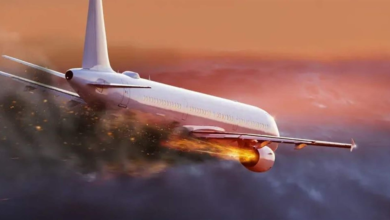
Today, the eastern Indian state of Jharkhand witnessed a horrific air disaster that resulted in the death of 7 people, after an air ambulance plane crashed while on a humanitarian mission to transport a critically ill patient. The plane crashed in a dense forest area, turning the rescue mission into a tragedy that made headlines worldwide.
Details of the tragic accident
The Civil Aviation Authority of India (CAAI) confirmed in an official statement that the crashed aircraft was a Beechcraft King Air C90, a special-purpose and medical transport plane. CAAI explained that the aircraft lost contact with air traffic control and crashed minutes after taking off from Ranchi Airport, the state capital. Initial investigations indicate that the aircraft encountered severe turbulence and unstable weather conditions, causing the pilot to lose control and crash.
Victims and the humanitarian mission
The plane was carrying a critically ill patient suffering from severe burns, who was urgently being transferred to New Delhi for advanced medical care and specialized treatment unavailable locally. The patient was accompanied on his final journey by a doctor and a paramedic to ensure his stability, as well as two family members and the flight crew, consisting of the pilot and co-pilot. The crash resulted in the deaths of all those on board, compounding the human tragedy.
The context of aviation and air ambulance services in India
This incident highlights the challenges facing both public and private aviation in India, particularly in the eastern and northeastern regions, characterized by rugged terrain, dense forests, and sudden weather changes that pose a significant risk to small and medium-sized aircraft. Beechcraft aircraft are widely used globally for air ambulance services due to their ability to land on short runways, but accidents caused by adverse weather conditions remain a major concern for aviation authorities.
The importance and impact of the event
The incident sparked widespread grief in India, reigniting the debate about safety standards in air ambulance flights and the need for stricter controls on flight licenses in adverse weather conditions. India's Directorate General of Civil Aviation (DGCA) typically conducts thorough investigations into such incidents to determine the precise causes—whether technical, human, or environmental—and ensure that such disasters do not recur.