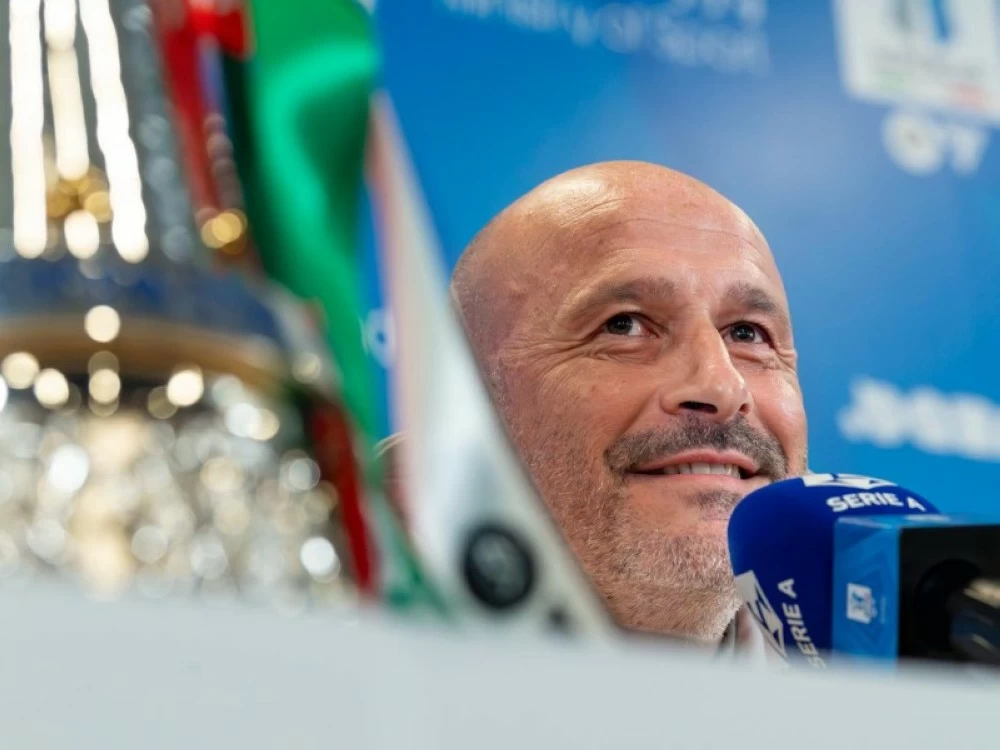
Bologna manager Vincenzo Italiano expressed his strong confidence in his team's readiness for the highly anticipated Italian Super Cup final against Napoli, which will be held at Al-Ahli Park in Riyadh, Saudi Arabia, on Monday evening. The Italian coach confirmed that morale within the camp is extremely high, describing the current pressure as "positive and motivating" in the lead-up to the anticipated triumph.
Riyadh: A global sports destination
This major clash comes as Saudi Arabia hosts the Italian Super Cup for the sixth time, reflecting the Kingdom's prestigious standing as a global destination for major sporting events, under the supervision and organization of the Ministry of Sport. The match holds special significance as it combines the rich heritage of Italian football with the passion of fans in the Arab region, with the King Fahd International Stadium providing an ideal venue thanks to its world-class facilities and vibrant atmosphere.
Small details and physical readiness
Speaking at the press conference, Italiano stressed that finals do not allow for mistakes, saying: “There is no room for worry among us, but rather we are filled with great enthusiasm and anticipation for this historic moment. We realize that small details make the difference in such big occasions, and therefore we must be a united front on the field with the highest degree of concentration.”.
The Bologna coach pointed to the physical challenge facing the team, explaining: “There wasn’t enough time for a full recovery after the grueling semi-final match, so our choices for the starting lineup will depend largely on the physical and mental readiness of each player. However, the euphoria of victory and qualifying for the final effectively contributed to accelerating the recovery process.”.
The philosophy of winning and overcoming absences
In response to the famous saying that “finals are played, not won,” Italiano expressed a different viewpoint reflecting his burning desire to win the title, saying: “I think this phrase is inaccurate; losing in the final leaves deep pain, while winning gives an unparalleled feeling. This is my eighth participation in the finals, and I have learned that courage and respect for the opponent are the key to winning.”.
The coach did not hide his sadness at the absence of player “Bernardt” due to injury, describing his absence as an impactful loss given his technical and leadership value, but he stressed at the same time that the team will not look for excuses and will enter the match with whoever is available from the stars to compensate for this absence.
The ambition to write history
Italiano concluded his remarks with emotional words highlighting his passion for football, praising the excellent organization and warm welcome in Riyadh, and emphasizing that reaching the final with a prestigious club like Bologna is a great honor, and that the goal now is not just to participate honorably, but to fight to write a new golden page in the club’s history and to make the fans who are waiting for this title happy.