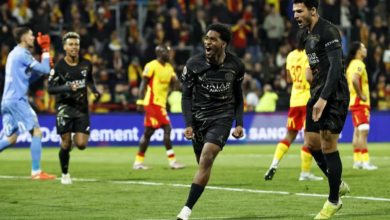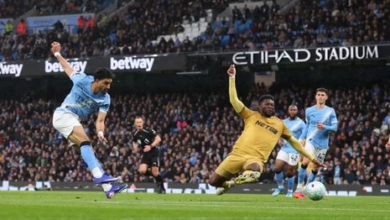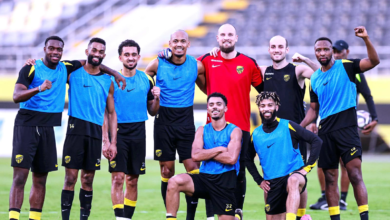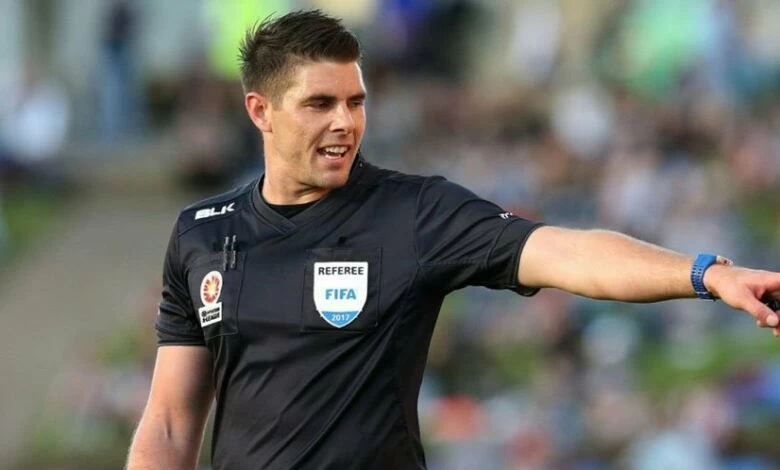
Australian referee Shaun Evans will officiate the Al-Hilal vs. Al-Sadd match in Asia

Australian refereeing team appointed for Al Hilal vs Al Sadd match
The Asian Football Confederation (AFC) Referees Committee has officially announced its decision to assign the highly anticipated match between Saudi Arabia's Al-Hilal and Qatar's Al-Sadd to an Australian refereeing team led by international referee Shaun Evans. This crucial encounter is part of the Round of 16 of the newly revamped AFC Champions League. Evans will be assisted by his compatriots, Lakrindis George and Andrew Meimarakis, while Singaporean referee Muhammad Taqi will be in charge of the Video Assistant Referee (VAR) system to ensure accurate decisions in this sensitive match.
General context and importance of the Asian confrontation
This encounter holds immense regional and continental significance, bringing together two giants of Asian football. Saudi Arabia's Al-Hilal enters the match as the historical leader of the Asian continent and the most decorated club in the competition's history with four titles, while Qatar's Al-Sadd, two-time Asian champions, seeks to prove its worth and advance to the later stages. This match is part of the new format of the "AFC Champions League Elite" tournament, introduced by the Asian Football Confederation to enhance competitiveness and increase financial returns, making every knockout stage match akin to an early final, attracting widespread media and public attention.
Shawn Evans' history with Saudi clubs
In terms of his refereeing record, this won't be Sean Evans' first match officiating an Al-Hilal game this season. He previously refereed the team's match against Al-Duhail of Qatar in the first round of the same tournament. He also officiated another match between Al-Ahli of Saudi Arabia and Al-Sadd of Qatar in the same edition, reflecting the Asian Football Confederation's confidence in his ability to manage complex Gulf derbies.
The Australian referee has previous experience officiating matches involving Saudi clubs and national teams, most notably the Asian Clasico between Al-Hilal and Al-Ittihad in the 2024 AFC Champions League quarter-finals, which ended in a 2-0 victory for Al-Hilal and saw him issue a red card to French star N'Golo Kanté. He also officiated the Saudi national team's match against Oman in the 2023 AFC Asian Cup, as well as Al-Nassr's match against Al-Rayyan of Qatar in the group stage.
A distinguished refereeing career and a World Cup appearance
The Sydney native, born in 1986, began his refereeing career as an assistant referee in the Australian A-League in 2008. His passion for the game led him to dedicate himself fully to refereeing in 2016, shortly afterward receiving his FIFA international badge. His efforts culminated in his selection as part of the Video Assistant Referee (VAR) team for the 2022 FIFA World Cup in Qatar.
In addition, Evans has officiated at several major events, including the 2019 Australian League Final, the 2021 AFC Cup Final, and the 2022 AFC Cup Final, as well as matches in competitive leagues such as the Chinese Super League and the Indonesian League.
Why is he nicknamed "the penalty kick lover"?
Perhaps what distinguishes Shaun Evans' career is his unmistakable strictness on the pitch, earning him the nickname "The Penalty Shooter." Throughout his refereeing career, which spanned 274 official matches, the Australian referee brandished 1,009 cards, including 48 red cards, while awarding a remarkable 89 penalties. These statistics underscore the need for Al-Hilal and Al-Sadd players to exercise extreme caution inside the penalty area to avoid any decisive decisions that could alter the course of this highly anticipated Asian clash.