Al-Sayari warns of shocks to the global financial system: Saudi Arabia is a model of stability

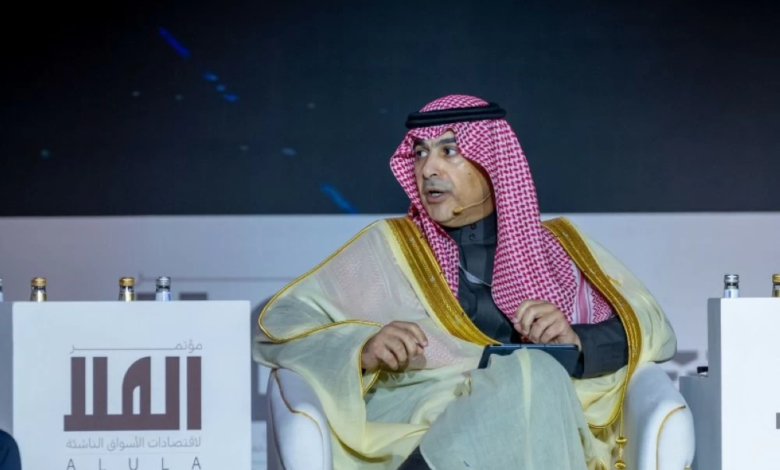
Ayman Al-Sayari issued strong warnings about the future of the global financial system, indicating that the international economy is no longer facing mere passing fluctuations, but rather a new reality characterized by intertwined structural shocks. This came during his active participation in the Al-Ula Emerging Economies Conference, where he highlighted the unprecedented challenges that are creating uncertainty in global markets.
A radical shift in the nature of crises
In a deep analysis of the economic landscape, Al-Sayari explained that the shocks hitting the financial system are no longer isolated or circumstantial events as they were in past decades, but have become multifaceted and more frequent . The governor attributed this complex situation to four main drivers reshaping the economic map:
- Geopolitical fragmentation: which directly affects supply chains and the movement of global trade.
- Technological acceleration: specifically the boom in artificial intelligence, which creates both opportunities and risks.
- Fluctuations in commodity markets: which put pressure on the budgets of both importing and exporting countries.
- The growth of non-bank financial intermediation: This is the most prominent challenge that has become a concern for financial regulators.
The risks of "shadow banks" and emerging economies
Al-Sayari elaborated on the risks stemming from the decline of traditional banking channels in favor of non-bank financial intermediaries (or what is known as shadow banking), revealing a worrying figure: assets in this sector now exceed 51% of total global financial assets . This structural shift has increased market sensitivity to liquidity fluctuations and intensified pressures related to margin calls and forced deleveraging.
In a related context, he pointed out that emerging economies are the weakest link in this chain, as they face structural and institutional fragility that reduces their ability to absorb external shocks, especially in light of rising debt costs and the fragmentation of international trade.
The Saudi model: Hedging and stability policies
The Governor of the Saudi Central Bank reviewed the Kingdom's experience as a model of resilient economies, emphasizing that the financial stability Saudi Arabia enjoys did not come about by chance, but is the result of sound monetary and fiscal policies that operate countercyclically. He explained that the Kingdom adopted a strategy of building effective "shock absorbers," which include:
- Accumulating strong foreign exchange reserves during periods of growth for use in times of crisis.
- Deepening financial markets (debt and capital markets).
- The policy of pegging the riyal to the US dollar, which played a pivotal role in stabilizing prices.
Al-Sayari pointed out, in terms of numbers, the success of these policies, as the Kingdom has maintained an average inflation rate below 3% over the past five years, a remarkable rate compared to the fierce global inflation waves.
Call for international cooperation
Al-Sayari concluded his remarks by outlining a roadmap for the future, emphasizing that international cooperation is no longer an option but an urgent necessity. He called for enhanced cross-border data exchange to accurately assess vulnerabilities and for harmonization in the adoption of emerging financial technologies, ensuring that innovation is leveraged without compromising global financial stability.