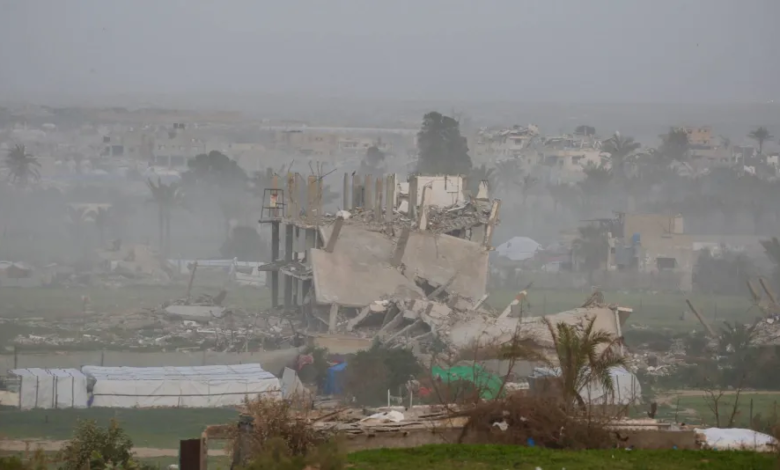

Official reactions poured in from Arab and Islamic capitals, expressing strong condemnation and denunciation of Israel's continued violations of the ceasefire agreement in the Gaza Strip. These countries considered the ongoing violations a blatant challenge to international law and international humanitarian law, threatening to undermine the tireless diplomatic efforts exerted by regional and international parties to solidify the truce and prevent further bloodshed among civilians.
Background of events and human context
This escalation comes at a time when the Gaza Strip is suffering an unprecedented humanitarian crisis, the result of years of blockade and repeated military operations that have led to widespread destruction of infrastructure and the displacement of hundreds of thousands of residents. Ceasefire agreements have always been fragile, with human rights and international organizations repeatedly accusing Israel of failing to uphold the terms of the truce, whether through continued intensive overflights, targeting of border areas, or obstructing the delivery of essential humanitarian aid to the besieged territory.
Diplomatic stances and mediation efforts
Statements issued by the Organization of Islamic Cooperation and the Arab League confirm that these violations not only impede the delivery of humanitarian aid but also place the entire region on the brink of disaster. The key players in the mediation efforts, most notably Egypt and Qatar, have stressed the need for the international community, particularly the Security Council and the United States, to exert real pressure on Israel to compel it to respect the signed agreements. These diplomatic efforts are considered the cornerstone of preventing the situation from escalating into a full-blown regional war with potentially uncontrollable consequences.
Expected repercussions and the importance of adhering to the truce
Observers and political analysts believe that the continuation of these violations could lead to a complete collapse of the negotiation process, resulting in a more brutal cycle of violence. Maintaining the ceasefire is crucial not only for security but also for urgent humanitarian reasons. The people of Gaza desperately need a period of calm to allow for the evacuation of victims, the treatment of the wounded, and the delivery of fuel, food, and medicine. Arab and Islamic states are demanding binding international guarantees and effective monitoring mechanisms on the ground to ensure these violations are not repeated, emphasizing that international silence regarding these practices is interpreted as a green light for continued violations against the Palestinian people.