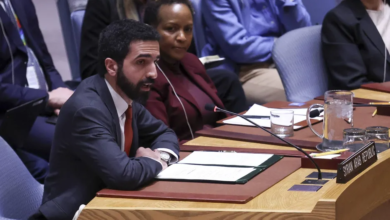

The Arab League affirmed its firm and unwavering position regarding the unity of Somali territory, considering that any moves aimed at recognizing the “Somaliland” region as an independent state, or concluding agreements that diminish the rights of the Somali Federal State, represent a clear attack on Arab national security and a violation of international law.
A firm rejection of any infringement on Somali sovereignty
The Arab League's statements came amid escalating tensions in the Horn of Africa, with the General Secretariat emphasizing that Somalia's sovereignty over all its territory, including the Somaliland region, is a red line that cannot be crossed. The League clarified that any unilateral agreements that disregard the Federal Government in Mogadishu are null and void, have no legal effect, and only serve to fuel conflicts in a region already suffering from instability.
Regional context and historical background
To understand the dimensions of this situation, one must consider the complex historical background. The region of Somaliland unilaterally declared its independence from Somalia in 1991 following the collapse of the central government, but it has not received formal international recognition despite enjoying relative stability compared to the south. The crisis recently resurfaced after the signing of a memorandum of understanding between Ethiopia and Somaliland, granting Addis Ababa access to the Red Sea in exchange for potential recognition of the region's independence. This has been viewed by the Arab League, Egypt, and Somalia as an existential threat.
The repercussions of recognition on Arab national security
Strategic experts believe that the danger of this issue extends beyond internal Somali affairs to encompass Arab national security, and Egyptian security in particular. Recognizing "Somaliland" opens the door to the fragmentation of Arab states and the redrawing of existing maps, and grants non-Arab regional powers a strategic foothold in the Red Sea and the Bab el-Mandeb Strait, a vital artery for the Suez Canal and global trade.
International and regional position
At the international level, the Arab League's vision aligns with the positions of the African Union, the United States, and the European Union, all of whom have emphasized the need to respect Somalia's sovereignty and territorial integrity. The League warns that the continuation of these policies could drag the Horn of Africa into a new cycle of violence, necessitating concerted Arab and international efforts to ensure regional stability and protect vital waterways from any political conflicts.