Arabic language: A fortress of identity and a bridge of civilization on its international day

A group of academics and specialists affirmed that the Arabic language is not merely a means of daily communication, but rather the fundamental pillar upon which the cultural and civilizational identity of the nation rests, and the impregnable fortress that safeguards religious and intellectual values across generations. These affirmations coincided with the celebration of World Arabic Language Day , observed annually on December 18th, the date on which the United Nations General Assembly adopted Arabic as the sixth official language of the organization in 1973, in recognition of its historical significance and profound influence on human civilization.
The importance of the Arabic language and its cultural influence
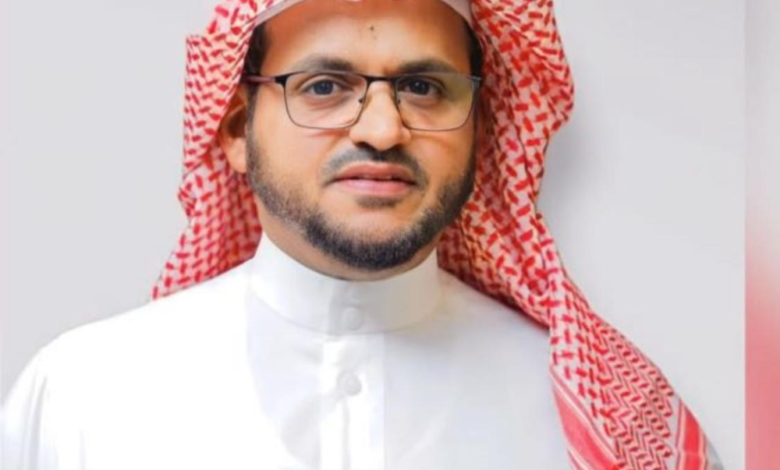
The Arabic language derives its strategic importance from being the language of the Holy Quran, which has granted it perpetuity and sanctity in the hearts of Muslims worldwide. Furthermore, it served as a vessel preserving the intellectual output of the Arab and Islamic world in science, philosophy, and literature during its golden age, acting as a bridge through which knowledge flowed to the West, contributing to the European Renaissance. In this context, Professor Abdulrahman Al-Sulami, Director of the Center of Excellence for Arabic Language Research at King Abdulaziz University, explained that Arabic contributes to strengthening societal identity in fundamental ways, serving as the living memory that preserves the nation's history and experiences.
Dr. Abdulrahman Al-Salmi
Al-Salmi added that language acts as a strong unifying factor among members of society, giving them a shared sense of belonging, and pointed out that Arabic literature, with its various arts, reflects the transformations and aspirations of society, making language a true mirror of reality and the future.
The leading role of the Kingdom of Saudi Arabia
Regionally and internationally, the Kingdom of Saudi Arabia continues to lead efforts to serve the Arabic language. In this regard, Professor Dr. Maliha Mohammed Al-Qahtani, a faculty member at Prince Sattam University, stated that the Kingdom stands at the forefront of countries serving Arabic, stemming from its status as the birthplace of revelation.

Dr. Maliha Al-Qahtani
Al-Qahtani pointed out that the establishment of the King Salman Global Academy for the Arabic Language represents a qualitative leap in institutionalizing linguistic work, as the Academy works to launch initiatives that serve the language in the fields of computing and artificial intelligence, and to spread it to non-native speakers, in addition to the scholarships that Saudi universities provide to international students, which enhances the soft power of the Kingdom and consolidates the presence of Arabic in international forums such as UNESCO.
Challenges of the digital age and solutions
Despite its long-standing status, the Arabic language faces contemporary challenges that require concerted efforts. Teacher Ghada Makki Al-Sharif explained that the digital age has imposed a new reality characterized by the dominance of foreign languages, particularly English, in technical and scientific content, which may affect the linguistic practices of younger generations.

Ghada Al-Sharif
Al-Sharif stressed the need to enhance digital Arabic content and support translation and publishing movements, calling on educational institutions to innovate creative ways to teach Arabic that make the younger generation love it, and emphasizing in her message to the new generations the importance of adhering to classical Arabic in various fields of life to ensure the continuity of this great cultural heritage.