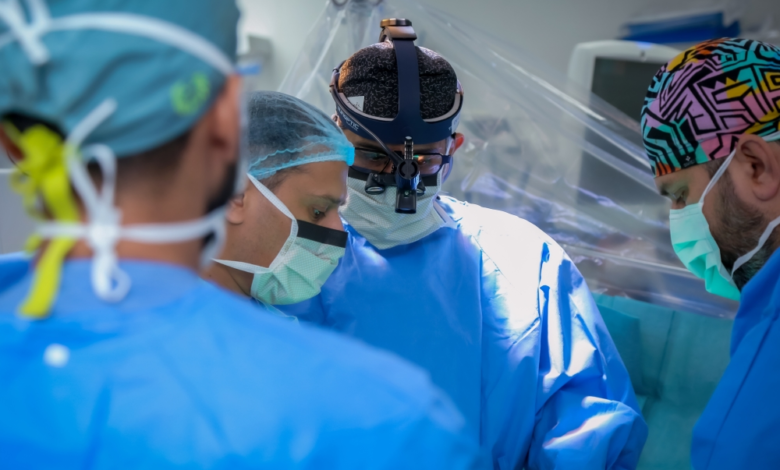
The Specialized Hospital records the first global case of 7 robotic cardiac interventions

King Faisal Specialist Hospital and Research Centre in Saudi Arabia has achieved a new global medical milestone by successfully performing a complex heart surgery involving seven simultaneous surgical interventions using robotic technology on a patient in her seventies. This achievement further solidifies the Kingdom's position as a leading center for specialized healthcare and microsurgery.
Details of the unprecedented medical achievement
The surgical team at King Faisal Specialist Hospital & Research Centre (KSRESS) successfully treated a highly complex case involving a patient suffering from a rare combination of acquired and congenital heart defects. The seven interventions performed in a single session included: mitral valve replacement, tricuspid valve repair, a Mayes procedure for cardiac electrophysiology correction, pulmonary vein ablation, atrial appendage ligation, closure of an atrial septal defect, and reconstruction of the complex venous anatomy using two surgical patches.
The genius of this procedure lies in its execution entirely through very small incisions without the need for a traditional sternotomy, which represents a radical shift in global cardiac surgery protocols for complex and intersecting cases.
The robotic technology revolution in heart surgery
The use of robots in such delicate procedures represents a significant leap forward in modern medicine. This technology allows surgeons to have high-resolution 3D vision and joint movements that surpass the capabilities of the human hand, enabling safe access to precise areas within the heart. This approach spared the patient the risks associated with traditional open surgery, reduced the likelihood of bleeding and infection, and shortened her hospital stay to just eight days, compared to the longer periods required by traditional procedures, thus accelerating her return to her normal life.
Saudi leadership and international standing
This achievement reflects the tremendous progress witnessed in the healthcare sector in Saudi Arabia under Vision 2030, which aims to enhance quality of life and elevate medical services to world-class standards. The success of this operation underscores the competence of Saudi medical professionals and their ability to adapt cutting-edge technologies to serve patients.
It is worth noting that King Faisal Specialist Hospital and Research Centre continues to lead the regional and international medical scene, having been ranked first in the Middle East and North Africa, and 20th globally in the list of the top 250 academic healthcare institutions for 2024. It has also maintained its position as the most valuable health brand in the region, making it a major destination for medical tourism and medical innovation.