The title of Crown Prince was revoked, and fines of 3 million riyals were imposed

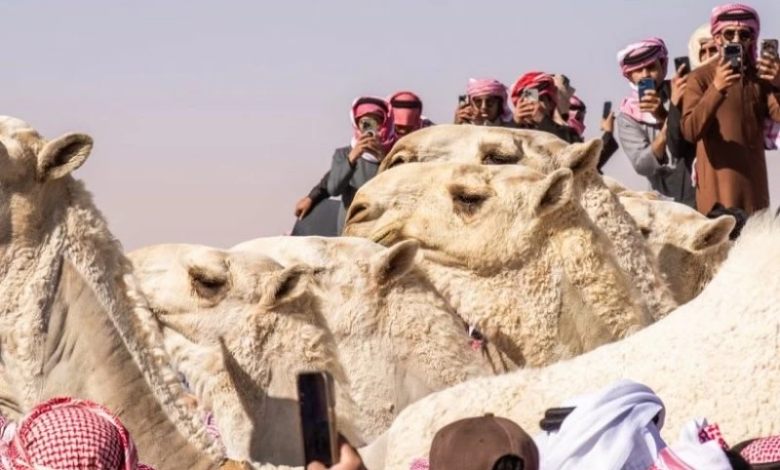
In a decisive move reflecting the Kingdom of Saudi Arabia's commitment to regulating and developing the camel sector according to the highest international standards, the Camel Club announced a series of strict financial and sporting penalties against several participants in the King Abdulaziz Camel Festival. These decisions were based on the results of laboratory tests on blood samples, which proved inconsistencies with the documented data, thus establishing a new era of transparency and integrity in this rich heritage.
Details of the penalties in the “Crown Prince’s Shalfah” round
The legal committee of the Camel Club announced significant decisions affecting the results of the Crown Prince's Sword race for the "White Camel" category. The decisions included disqualifying prominent participants and withdrawing their prizes. Specifically, the first-place prize was withdrawn from participant Fahd bin Fahad bin Jadheeb Al-Saadi, along with a fine of one million Saudi riyals and his exclusion from the final competition standings.
The penalties also extended to participant Khalid bin Shuraid bin Khalid Al-Mutairi, whose fourth-place prize was revoked and who was fined two million Saudi riyals after it was proven that samples did not match the official documentation approved by the club. Thus, the total fines in this incident reached three million Saudi riyals, sending a clear message that any violations affecting the fairness of the competition will not be tolerated.
The shift towards biometric documentation and strict control
These measures mark a historic turning point for the King Abdulaziz Camel Festival, as the club has moved from relying on traditional customs and superficial assessments to adopting "biological identity" as a decisive legal criterion. The issue arose when specialized committees detected discrepancies between samples taken in the field from participating camels and the documentation data stored in the official registration database, necessitating recourse to laboratories as the final authority for resolving competitive disputes.
Economic and organizational dimensions of the decision
The importance of this event extends beyond mere arbitration; it encompasses the economic and investment dimensions of the camel sector, which has become a massive market worth billions of riyals. The application of these rigorous standards enhances investor and business confidence in the sector, as laboratory testing and genetic documentation ensure the protection of assets and investments from any manipulation, thereby increasing the market value of the participating camels.
This organizational movement is in line with the Kingdom’s vision to develop the popular heritage and transform it into a sustainable sports and economic industry, subject to precise governance laws similar to those in place in international sports federations, thus ensuring the sustainability of the festival and its status as the largest global event related to camels.