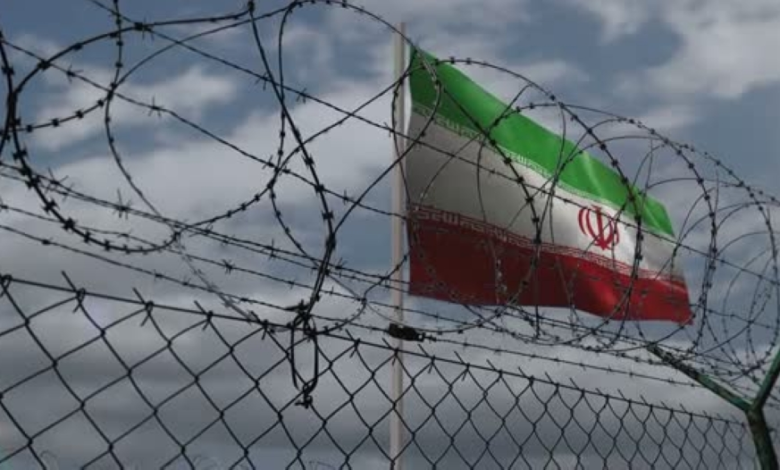
Canada's sanctions on Iran: targeting entities affiliated with the Revolutionary Guard

New Canadian escalation against Iranian activities
In a move reflecting continued tensions in bilateral relations and the international commitment to combating destabilizing activities, the Canadian government announced a new round of stringent sanctions targeting individuals and entities linked to the Iranian regime. This step comes as part of Ottawa's ongoing efforts to curb Tehran's influence in the Middle East and undermine its ability to support armed groups.
Details of the latest Canadian sanctions
The Canadian Ministry of Foreign Affairs stated in an official statement that the additional sanctions targeted five individuals and four Iranian companies closely linked to the Iranian Revolutionary Guard Corps (IRGC). Canada explicitly accused these individuals and entities of direct involvement in supporting non-state militias and designated terrorist groups allied with Tehran. These activities include supplying these groups with advanced weapons and military technology, which significantly contributes to destabilizing the security and stability of the Middle East region.
The Canadian statement emphasized that Ottawa will not hesitate to impose further sanctions on any entity or individual found to be involved in facilitating or supporting Iranian activities that destabilize the region and the world. With this new package, the total number of individuals and entities on Canada's sanctions list rises to 227 and 260, reflecting the extent of Canada's economic and diplomatic pressure.
The historical context of Canadian-Iranian relations
To understand the implications of these sanctions, one must consider the historical background of relations between Canada and Iran, which have deteriorated sharply over the past decade. Canada severed diplomatic ties with Iran in 2012 and closed its embassy in Tehran, accusing Tehran of threatening global security. This tension escalated to unprecedented levels in January 2020 after the Iranian Revolutionary Guard shot down a Ukrainian passenger plane (Flight PS752), which was carrying dozens of Canadian citizens and residents.
In a significant and important development during 2024, Canada officially designated the entire Iranian Revolutionary Guard Corps as a terrorist organization, a decision that the Iranian community in Canada and human rights groups had been demanding for years, thus paving the way for these successive packages of precise and targeted sanctions.
The expected impact of the sanctions locally, regionally, and internationally
At the Iranian domestic level , these sanctions increase the economic stranglehold on the Revolutionary Guard's financing networks, limiting its ability to access the global financial system or import dual-use technologies that enhance its military arsenal.
At the regional level , targeting supply lines and arms transfers aims to weaken the capabilities of Iranian-backed militias in the region. Reducing the flow of weapons and technology diminishes the operational capacity of these groups, which play a key role in perpetuating regional conflicts and threatening shipping lanes.
Internationally , and the United Kingdom. This Western coordination sends a unified and firm political message to Tehran: the international community will not tolerate its interference in foreign affairs, thus strengthening the effectiveness of the global sanctions regime and making it more difficult for Iranian entities to evade them through shell companies.