The Kingdom and India sign an agreement exempting diplomatic passports from visa requirements

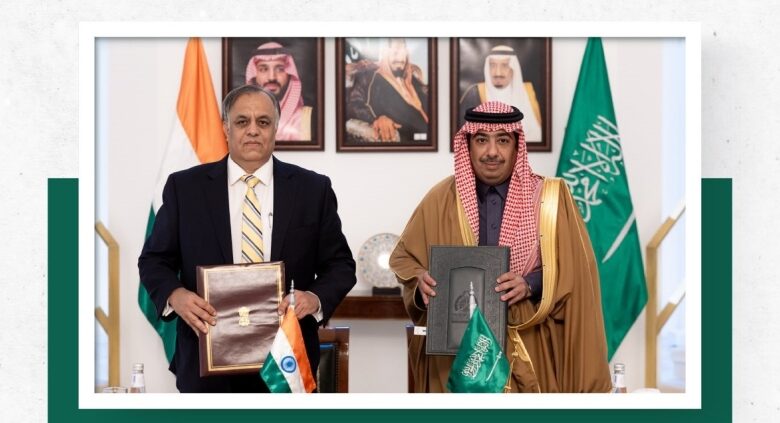
Today, the Ministry of Foreign Affairs headquarters in Riyadh witnessed an important diplomatic step reflecting the depth of the growing relations between the Kingdom of Saudi Arabia and the Republic of India, as the two parties signed a bilateral agreement aimed at facilitating the movement of officials and diplomats between the two friendly countries.
On behalf of His Highness Prince Faisal bin Farhan bin Abdullah, Minister of Foreign Affairs, the Undersecretary for Protocol Affairs, Abdulmajid Al-Samari, signed the agreement with the Ambassador of the Republic of India to the Kingdom, Dr. Suhail Ijaz Khan. The agreement stipulates the mutual exemption from short-stay visa requirements for holders of diplomatic, special, and official passports, paving the way for greater flexibility in the exchange of official visits.
Historical context and deep-rooted partnership
This agreement is not a coincidence; rather, it represents a new chapter in a long history of fruitful cooperation between Riyadh and New Delhi. The Kingdom and India share historical ties dating back to 1947, and these relations have witnessed a significant leap forward in recent years, particularly following the establishment of the Saudi-Indian Strategic Partnership Council in 2019, which ushered in a new era of cooperation in the fields of politics, security, trade, and energy. Today, the Kingdom is India's fourth-largest trading partner, and India is a major source of human resources and technical expertise that contributes to the Saudi market.
The importance of the agreement and its expected impact
This agreement carries significant political and diplomatic implications; it reflects a high level of mutual trust between the two governments. This step is expected to have direct positive effects, including:
- Facilitating official communication: Removing bureaucratic obstacles for official delegations will accelerate the pace of joint committee meetings and working group meetings stemming from the Strategic Partnership Council.
- Enhancing economic cooperation: Easier movement of holders of special and official passports, who are often senior economic officials and executives in government sectors, will support accelerating joint investment initiatives within the Kingdom’s Vision 2030.
- Coordinating international positions: The smooth movement of diplomats allows for intensified political consultation on regional and international issues of common interest, enhancing the role of both countries as active powers in the G20.
This step confirms the determination of the leadership in both countries to overcome all obstacles that may hinder the development of relations, and to move forward towards achieving broader integration that serves the interests of the two friendly peoples and enhances stability and prosperity in the region.