
International and domestic concerns are mounting in Ukraine about the potential for another nuclear disaster at the Chernobyl plant, amid ongoing military operations and continued Russian shelling. Sergei Tarakanov, the director of the decommissioned nuclear facility, warned that any major military strike near the site could cause the collapse of the radiation shelter, reviving the specter of the disaster that shook the world decades ago.
Potential collapse scenario
In statements to AFP, Tarakanov explained the seriousness of the current situation, noting that the station doesn't need to be hit directly to be affected. He said, "If a missile or drone were to directly strike the site, or even if an Iskander missile were to land in the vicinity of the station, it could cause a small earthquake and tremors in the area." He emphasized that the greatest danger lies in the lack of any guarantees that the internal shelter would remain intact after such tremors, which threatens the collapse of the old structure that contains enormous quantities of radioactive dust.
Damage to the "new safety barrier"
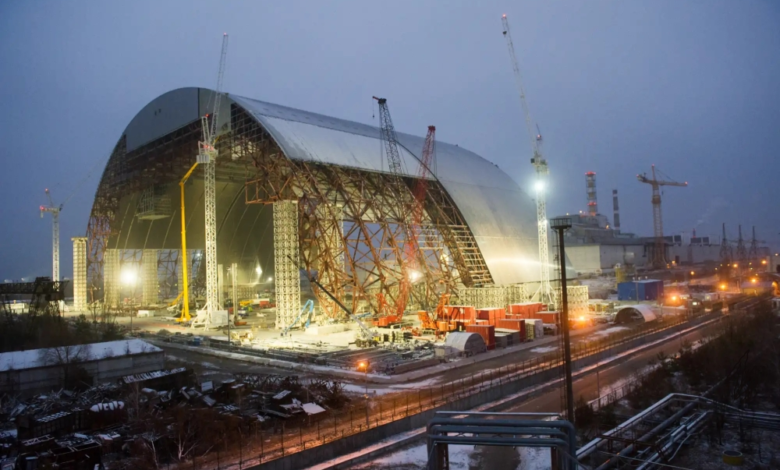
The Chernobyl plant boasts complex fortifications, including an internal steel and concrete structure hastily constructed following the 1986 disaster, as well as a modern, sophisticated outer casing known as the New Safety Seal (NSC). However, this casing sustained significant damage last February when a Russian drone strike caused a massive fire that damaged the outer cladding of the steel structure.
The station manager noted that the insulation had lost much of its primary function, estimating that restoring its insulating properties to their original state could take three to four years of continuous work. Although the gap created by the air raid was covered with a protective screen, there was an urgent need to seal approximately 300 small breaches made by firefighters during the blaze.
Historical background: The Ghost of 1986
These warnings are of paramount importance given the site's tragic history. In 1986, reactor number 4 at Chernobyl suffered a catastrophic explosion, considered the worst nuclear accident in history, releasing a radioactive cloud that blanketed large parts of Europe. Since then, the international community and Ukraine have been working to contain the radiation by constructing the concrete "sarcophagus" and, more recently, the giant steel arch (NSC), designed to ensure complete isolation for a century. Any damage to this protective system would not only threaten Ukraine but could also have environmental and health repercussions for neighboring countries.
Position of the International Atomic Energy Agency
For its part, the International Atomic Energy Agency (IAEA) confirmed the seriousness of the situation after sending an inspection mission to the site earlier this month. The mission reported that the shelter had "lost its basic security functions," specifically its buffering capabilities, although it confirmed that there was no permanent damage to the supporting structures or monitoring systems so far. Radiation levels at the site remain "stable and within normal limits," according to Tarakanov, but the ongoing military operations keep the area in a state of constant danger, especially since Russian forces briefly controlled the facility at the beginning of the war in 2002.