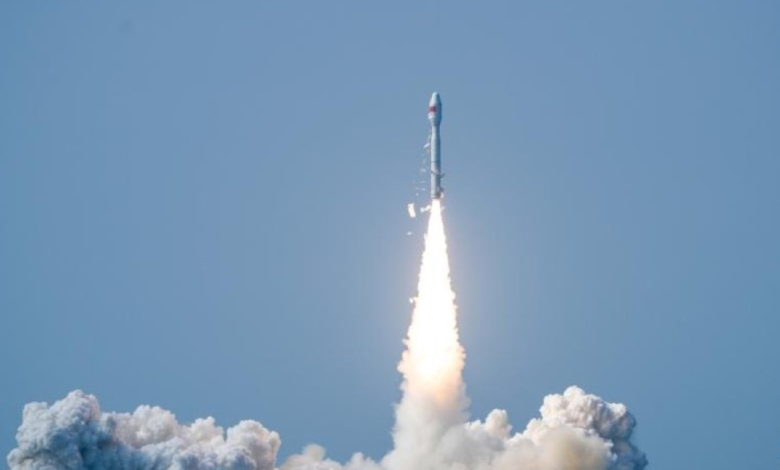

Details of the successful launch
In a new step reflecting the continued development of its space program, China announced today the successful launch of eight new satellites into space. The launch was carried out using the Kuaizhou-11 Y7 space launch vehicle, a modern and innovative rocket designed for commercial payloads. According to an official statement issued by the Xinhua News Agency, the rocket lifted off at 12:12 PM Beijing time from the Jiuquan Satellite Launch Center in northwest China, and the eight satellites were placed into their predetermined orbits with pinpoint accuracy.
General context and historical background of the Chinese space program
This launch comes amid a series of successes achieved by China's space sector in recent decades. The Jiuquan Satellite Launch Center, from which the rocket was launched, is China's oldest and most important space launch center, established in 1958. It has witnessed the launch of China's first satellite, as well as numerous manned space missions. Furthermore, the Kuaizhou family of rockets (meaning "fast ship" in Chinese) represents a significant leap forward in China's capabilities for rapid and low-cost commercial launches. These rockets were specifically developed to meet the growing global demand for deploying small satellite networks, reflecting a strategic shift towards strengthening the commercial space economy and developing advanced space technologies.
The importance of the event and its expected impact locally and internationally
Domestically, these new satellites contribute to strengthening China's technological infrastructure, particularly in vital areas such as communications, remote sensing, and Earth observation. These technologies support key sectors like natural disaster management, agricultural planning, and precision navigation. This move also underscores Beijing's ability to maintain a high and stable launch rate, enhancing its technological independence and reducing its reliance on foreign technologies.
On both regional and international levels, this launch carries significant strategic implications. It solidifies China's position as a major and formidable competitor in the global commercial space launch market, currently dominated by major Western companies. By offering fast, reliable, and cost-effective launch alternatives through its Kuaizhou rockets, China aims to attract more international partnerships and extend its services to other nations. Furthermore, this development reflects China's unwavering commitment to expanding its presence and influence in outer space, aligning with its overarching vision of becoming a leading space power by mid-century, alongside its ambitious projects such as the Tiangong space station and its lunar and Mars exploration programs.